
Risk Management and Compliance Software | GRC Solutions
Manage operational risk, ensure regulatory compliance, and demonstrate governance across all your sites with integrated GRC (Governance, Risk and Compliance) software. OpsPal provides the systems, audit trails and accountability needed to identify risks, track compliance obligations, implement controls, and prove to regulators, insurers and auditors that you manage risk systematically rather than reactively. See how Stirling University uses OpsPal


































Identify and assess risks across your operations
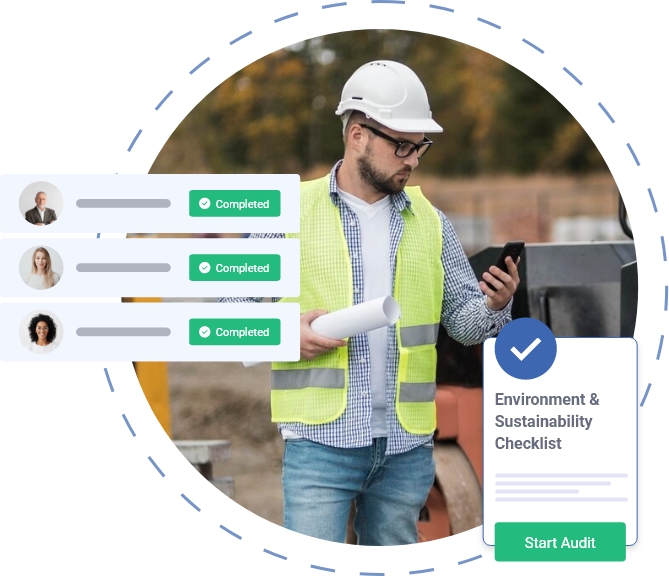
Effective risk management starts with comprehensive risk identification and assessment. OpsPal provides the structure to identify hazards, assess their potential impact, implement controls, and monitor whether risk mitigation measures remain effective.
Create and maintain risk registers covering all operational risk categories — health and safety hazards, environmental risks, compliance breaches, reputational threats, operational failures, financial exposures and security vulnerabilities. Digital risk assessments ensure consistent methodology across all sites, with location tracking showing where specific risks are concentrated.
Track how risks change over time
When controls are implemented, reassess risk levels to verify effectiveness. When circumstances change (new equipment, processes, sites or regulations), update affected risk assessments. Monitor whether risk trends are improving or deteriorating across your organisation.
Link risk assessments to the controls meant to mitigate them. Connect workplace hazards to procedures describing safe working practices. Link compliance risks to monitoring tasks verifying regulatory adherence. Associate operational risks with preventative maintenance preventing equipment failures. This integration ensures risk management connects to operational reality rather than existing as isolated documentation.
Multi-site operators gain visibility of risk profiles across different locations. Compare risk exposure between sites. Identify whether certain locations carry disproportionate risk requiring additional controls or resources. Use this intelligence for strategic risk management decisions rather than treating each site in isolation.
Track compliance obligations and deadlines
Regulatory compliance creates complex tracking requirements — statutory inspections, certification renewals, periodic testing, training requirements, licence conditions and industry-specific regulations. Miss a compliance deadline and you risk regulatory enforcement, insurance invalidation, prosecution or reputational damage.
OpsPal’s compliance management tracks every obligation across all locations. Schedule inspections, tests and certifications according to regulatory frequencies. Automated reminders ensure deadlines aren’t missed — fire safety inspections, electrical testing, lifting equipment examinations, gas safety checks, food hygiene inspections, environmental permits, data protection audits and countless other requirements.
Capture compliance evidence as tasks are completed
When fire alarms are tested, electrical systems inspected, or safety training delivered, the system creates time-stamped records with completion evidence. This audit trail demonstrates systematic compliance management to regulators and insurers.
Multi-site compliance visibility shows which locations are compliant and which have outstanding obligations. Filter by compliance type, due date, site or status. Generate compliance reports for board meetings, audit committees or regulatory inspections. Escalating alerts notify senior management when compliance deadlines approach without action.
Link compliance obligations to the policies, procedures and training supporting them. Food safety compliance connects to food hygiene procedures, HACCP plans and staff training records. Health and safety compliance links to risk assessments, safe systems of work and competency records. This integration proves you don’t just tick compliance boxes — you embed requirements into how you operate.
Respond to incidents and implement corrective actions
When things go wrong
Incidents, near-misses, compliance breaches, audit findings or customer complaints — systematic investigation and corrective action prevent recurrence and demonstrate responsible risk management.
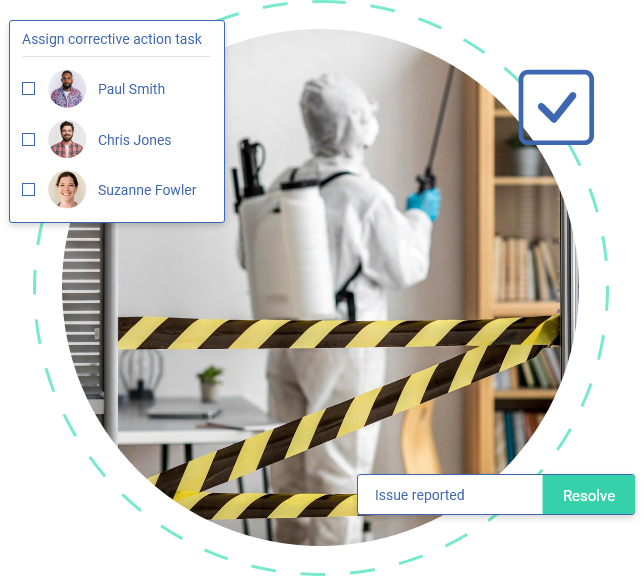
Incident reporting captures what happened, who was affected, immediate actions taken and potential root causes. Photographic evidence, witness statements and location data provide comprehensive incident records. Automated workflows route incidents to investigators based on severity, type or location.
Root cause analysis identifies why incidents occurred rather than just what happened. Distinguish between immediate causes (person slipped) and underlying failures (inadequate cleaning procedures, missing non-slip flooring, insufficient supervision). This analysis drives corrective actions addressing systemic problems rather than blaming individuals.
Corrective action tracking
Ensures improvements are implemented and verified. When investigations identify control failures, generate improvement tasks assigned to owners with deadlines. Track whether corrective actions actually resolve issues or require further intervention. Monitor corrective action completion rates across sites to ensure findings lead to genuine improvements.
Trend analysis reveals recurring problem patterns. When similar incidents happen repeatedly, you’ve identified systemic risks requiring strategic intervention rather than site-by-site responses. Use incident data to prioritise risk reduction initiatives and demonstrate continuous improvement of risk management.
Link incidents back to risk assessments. When hazards materialise into actual incidents, review whether existing controls failed, were insufficient, or weren’t followed. Update risk assessments based on incident learning. This closed-loop process ensures risk management reflects operational reality.
Demonstrate governance and accountability
Risk management and compliance aren’t just operational necessities
They’re governance responsibilities. Boards, executives, regulators, insurers and stakeholders expect evidence of systematic risk governance, not informal arrangements relying on individual knowledge.
Complete audit trails show what was done, when, by whom and at which location. Every risk assessment, compliance check, incident investigation and corrective action links to an individual user. This granular accountability prevents governance failures where nobody owns critical activities or responsibility is unclear.
Generate governance reports for boards and audit committees showing risk profiles, compliance status, incident trends and corrective action effectiveness. Filter by site, risk type, compliance category or time period. Provide leadership with the risk oversight information needed for strategic decisions and regulatory disclosures.
Demonstrate to regulators and auditors that you manage risk systematically. Show comprehensive risk identification, consistent assessment methodology, implemented controls, compliance tracking, incident investigation and corrective action. This evidence supports regulatory defences, insurance renewals and certification audits.
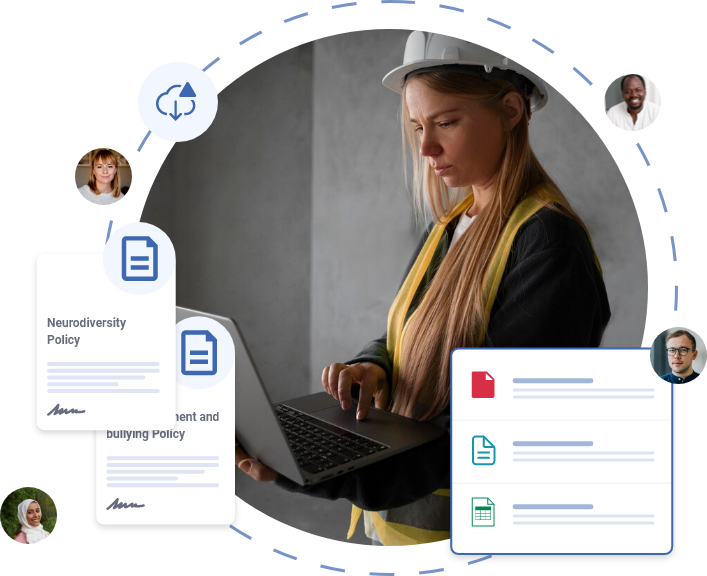
Policy and procedure management ensures governance requirements are communicated and acknowledged. Track which staff have read policies on anti-bribery, data protection, environmental responsibility, or health and safety. Maintain version control showing policy updates deploy across all sites. This documentation proves governance standards are embedded throughout your organisation.
Support GRC (Governance, Risk and Compliance) frameworks by integrating the three elements. Governance provides oversight and accountability. Risk management identifies and mitigates threats. Compliance ensures regulatory adherence. OpsPal integrates all three into operational systems rather than maintaining separate GRC functions disconnected from daily operations.
Frequently Asked Questions
What is risk management and compliance software?
Risk management and compliance software is a digital platform that helps organisations identify, assess, monitor, and control workplace risks while maintaining regulatory compliance. Instead of relying on paper documents and spreadsheets, the software centralises risk assessments, compliance tasks, problem records and audit trails in one accessible system.
The platform manages risk assessments with staff acknowledgement tracking, schedules compliance activities like equipment inspections and statutory checks, handles problem logging with photo evidence, and maintains training records showing staff competency. Managers see compliance status across their operations through live dashboards with colour-coded indicators—green for current, amber for due soon, and red for overdue.
Different sectors face different regulatory requirements. Leisure facilities comply with HSE guidance and industry accreditation schemes. Educational establishments answer to Ofsted requirements. Charities demonstrate governance to the Charity Commission. The software adapts to sector-specific needs whilst providing consistent structure for systematic risk management.
Digital systems replace fragmented paper processes with connected visibility. When risk assessments are updated, staff receive notifications and acknowledge changes digitally. When problems are logged, managers have everything needed to investigate at the touch of a couple of buttons—photo evidence, problem history, and assignment tracking. When auditors visit, log reports generate evidence instantly filtered by date range and activity type, demonstrating that safety management is genuine daily practice rather than temporary performance for assessments.
How does risk management software help with regulatory compliance?
Risk management software helps organisations maintain regulatory compliance by creating systematic processes with complete audit trails rather than relying on individual memories and paper filing systems. The software schedules compliance activities like equipment inspections, fire checks and statutory testing as recurring tasks assigned to responsible staff. Dashboard visibility shows which activities are current (green), due within 30 days (amber) or overdue (red), so managers can see compliance status across their operation in real time.
Staff acknowledgement tracking ensures everyone has read current risk assessments and procedures, creating evidence that safety information reaches the people who need it. When documents are updated, staff receive in-app bell notifications and must acknowledge changes before the system marks them compliant. Version control with visual comparison shows exactly what changed between revisions—deleted content in red, added content in green.
Training matrices track qualifications at three levels—individual staff records, team reports, and organisation-wide dashboards. Colour coding shows which qualifications are current, expiring within 90 days, or expired. This visibility helps managers ensure staff have the competencies required for safety-critical tasks while providing evidence for inspectors.
When regulators or auditors visit, log reports generate comprehensive evidence, filtered by date range, department, or activity type. Instead of scrambling through file cabinets, organisations produce reports showing task completion records, staff acknowledgements, problem management, and training compliance—demonstrating systematic safety management maintained over weeks, months, or years.
What are the challenges of managing risk and compliance across multiple sites?
Managing risk and compliance across multiple sites creates exponential complexity compared to single-site operations. Ensuring consistent standards across geographically dispersed locations, tracking compliance status when you can’t physically see every site daily, coordinating training so all sites maintain required qualifications, and maintaining visibility of what’s actually happening at each location all become significantly harder as your estate grows.
Paper-based systems and spreadsheets make multi-site compliance nearly impossible to manage effectively. Risk assessments stored in site offices mean the head office can’t verify they’re current. Training records in separate spreadsheets mean you don’t know the organisation-wide qualification status without requesting updates from each site. Compliance tasks managed locally mean no visibility of whether activities are actually completed until something goes wrong or an auditor visits.
Digital risk management software provides organisation-level dashboards showing high-level patterns and compliance status across all sites—task completion rates, percentage of staff who’ve read current risk assessments, training matrix compliance, outstanding problems. This view doesn’t show department-specific detail; that requires drilling down to site level, which takes seconds. Site-level dashboards then show specific information—who completed which tasks, when, what problems are logged, which staff have outstanding training.
This two-tiered visibility means senior management sees organization-wide patterns, while area managers and site teams access the granular detail they need for daily operations. Multi-site consistency becomes achievable because everyone works within the same system, following the same processes, with full transparency of compliance status across the entire operation.
How do you provide compliance evidence for health and safety audits?
Providing compliance evidence for health and safety audits requires demonstrating systematic safety management maintained over time, not just showing that paperwork exists. Auditors and inspectors want proof that risk assessments are current and acknowledged by staff, compliance tasks are completed consistently, problems are identified and resolved, and training records show staff competency for their roles. Paper-based systems make this evidence gathering stressful and time-consuming.
Risk management software generates compliance evidence through log reports filtered by date range, department, task type or staff member. Task completion records show which activities were completed, by whom, and when. Staff acknowledgement reports demonstrate who has read current risk assessments and procedures. Training matrix reports provide instant qualification status across teams or the entire organisation. Missed tasks reports identify any activities that weren’t completed within chosen timeframes.
The audit trail is continuous rather than compiled for assessment visits. Every task completion, document acknowledgement, problem logged, and training record creates timestamped evidence showing genuine operational practice. Version control tracks all changes to risk assessments and procedures with visual comparisons showing what was added or deleted. Problem management records demonstrate how issues were identified, assigned, tracked and resolved.
Manager overview emails provide weekly or monthly summaries with key performance indicators—task completion rates, percentage of staff who’ve read all current documents, problems added and outstanding, and risk assessments requiring review. This ongoing documentation means audit preparation involves generating reports rather than frantically searching for evidence, demonstrating that compliance is embedded in daily operations rather than temporarily adopted when assessments are scheduled.
Why is digital risk management software better than spreadsheets?
Spreadsheets require manual updating, rely on individual diligence, and provide no accountability for whether staff have actually read safety information. When a risk assessment changes, you update a file and email it hoping everyone reads the attachment. When compliance tasks are due, you hope someone remembers to complete them and update the spreadsheet. When auditors visit, you compile evidence from multiple files scattered across different computers and folders. This fragmented approach creates gaps where critical safety information or compliance activities fall through.
Digital risk management software creates connected systems with automatic accountability. When risk assessments are updated, staff receive in-app bell notifications and must acknowledge changes before the system marks them compliant—you see exactly who has and hasn’t read the current version. When compliance tasks are due, the dashboard shows colour-coded status (green, amber, red) and weekly email reminders go to anyone with outstanding activities. When problems are logged, immediate email notifications go to assignees and managers, with everything needed to investigate accessible at the touch of a couple of buttons.
Spreadsheets become unusable for multi-site operations because you can’t see real-time status across locations without requesting updates from each site. Digital systems provide organisation-level dashboards showing compliance patterns across all sites, with drill-down to site level taking seconds. Staff can see cross-department information at their site, breaking down operational silos that spreadsheets reinforce.
The fundamental difference is visibility driving accountability. Spreadsheets hide compliance status until someone opens the file and checks. Digital dashboards make status visible to everyone who needs to see it—staff see their responsibilities, managers see their team’s status, senior management sees organisation-wide patterns. This transparency creates natural accountability and provides the complete audit trails regulators expect.
Book a Call With Our Team
We’re on hand for any questions you may have. Simply book a meeting using our booking system and we will talk you through any questions.