
Health & Safety Management Software | Multi-Site Compliance
Transform how you manage health and safety across multiple sites with digital systems that keep your teams safe, ensure regulatory compliance, and provide the audit evidence inspectors expect. OpsPal’s health and safety management software replaces spreadsheets and paper records with real-time visibility of risk assessments, inspections, incidents, training and corrective actions — giving you control of compliance across your entire operation. See how Hurleston Hall benefitted from OpsPal





































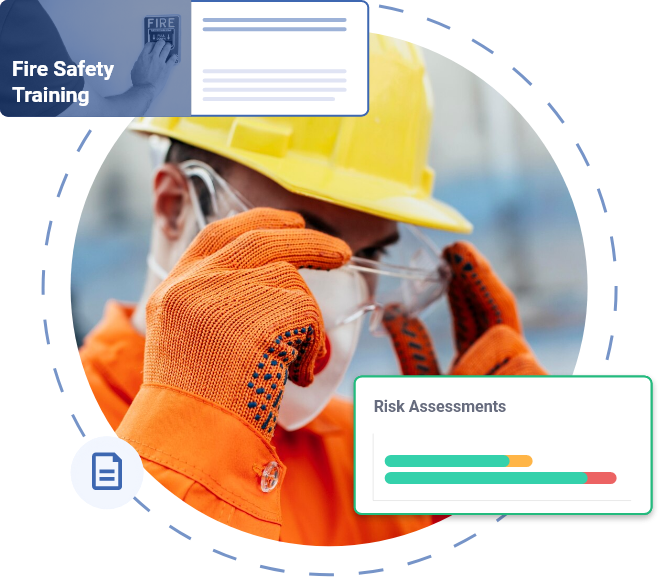
Create a safer workplace through systematic risk management
Protecting your teams, customers and visitors
Starts with identifying hazards, assessing risks and implementing effective controls. Whether you operate leisure facilities, retail sites, hospitality venues, educational establishments, healthcare facilities or multi-site commercial operations, systematic health and safety management is both a legal duty and a business necessity.
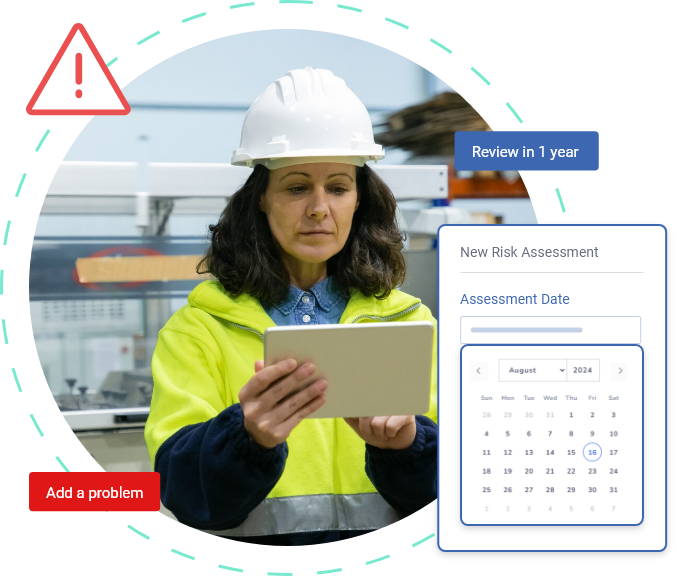
OpsPal’s health and safety software provides the structure you need to manage risk effectively across all your locations. Create and maintain comprehensive risk assessments covering workplace hazards, operational activities, equipment use, and site-specific dangers. Track control measures to ensure they’re implemented and effective. Review assessments when circumstances change or at scheduled intervals, maintaining complete audit trails showing your systematic approach to safety management.
Essential health and safety management capabilities:
Risk assessments: Generic workplace assessments, activity-specific evaluations, COSHH assessments, fire risk assessments, manual handling assessments, lone working evaluations, DSE assessments
Compliance tracking: Statutory inspections, equipment testing schedules, certification renewals, regulatory requirement monitoring, licence and permit management
Incident management: Accident reporting, near-miss recording, occupational ill-health tracking, investigation workflows, corrective action management, RIDDOR reporting support
Inspections and audits
Safety tours, workplace inspections, equipment checks, housekeeping audits, compliance verification, management system reviews
Policy and procedure management: Health and safety policies, safe systems of work, method statements, emergency procedures, contractor management protocols
Training and competency: Safety induction records, role-specific training, competency verification, certification tracking, refresher training scheduling
Every element integrates into a complete health and safety management system rather than disconnected spreadsheets and filing cabinets. Risk assessments link to related procedures and training requirements. Incidents trigger investigation tasks and corrective actions. Inspection findings generate improvement activities tracked to completion.
Maintain compliance across multiple locations
Single-site operations find health and safety management challenging. Multi-site organisations face exponentially greater complexity — ensuring consistent standards, tracking compliance status, coordinating training, and maintaining visibility across geographically dispersed locations.
OpsPal’s health and safety software is purpose-built for multi-site compliance management, giving head office and area managers real-time visibility of safety performance across the entire estate whilst empowering site teams to manage day-to-day health and safety responsibilities effectively.
Multi-site compliance visibility
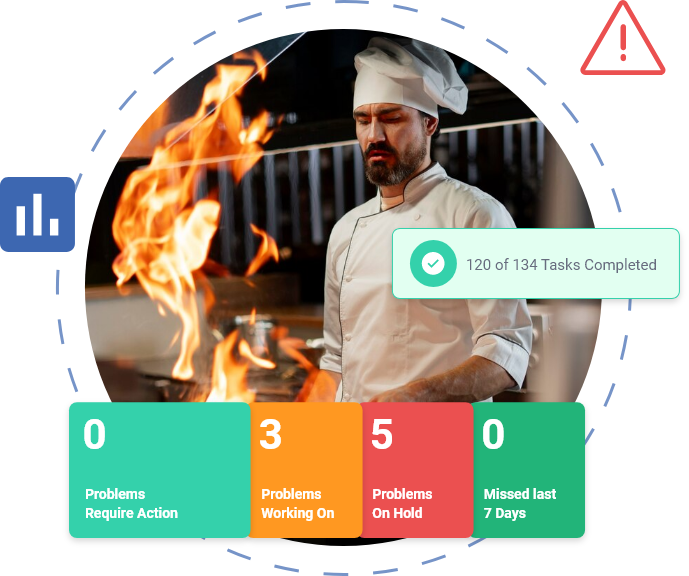
See health and safety status across all locations simultaneously through consolidated dashboards. Identify sites with overdue risk assessment reviews, outstanding corrective actions, or compliance gaps requiring immediate attention. Compare safety performance metrics across different locations to recognise best practice and support underperforming sites.
Location tracking shows exactly where risks are identified, incidents occur, and safety activities are completed. This geographic intelligence helps allocate safety resources strategically, identify sites needing additional support, and demonstrate systematic management of health and safety across your organisation.
Standardise whilst accommodating local requirements
Deploy consistent health and safety policies, procedures and risk assessment templates across all sites, ensuring everyone works to the same standards. Simultaneously accommodate site-specific requirements — local hazards, different operational activities, varying regulatory requirements or unique risk profiles.
When you update policies or procedures in response to regulatory changes, improvements are deployed instantly across all locations. Staff receive automatic notifications about changes requiring their attention. This eliminates the lag time where some sites operate to outdated standards whilst others have implemented updates.
Automated compliance tracking
The system tracks statutory inspection due dates, equipment testing schedules, certification renewals and regulatory compliance deadlines across all sites. Automated reminders ensure nothing is missed — fire alarm tests, emergency lighting checks, PAT testing, lifting equipment inspections, pressure system examinations, local exhaust ventilation testing, and countless other regulatory requirements.
Senior management receives escalating alerts when compliance deadlines approach without action, enabling intervention before missed inspections create regulatory breaches or insurance implications. This systematic tracking demonstrates competent health and safety management to HSE inspectors, insurers and certification auditors.
Evidence-based decision-making
Digital health and safety management creates the data you need for strategic decisions. Identify which hazard types generate most incidents across your operation. See where training gaps correlate with safety performance issues. Track whether specific sites or activities consume disproportionate safety resources. Use this intelligence to target improvement initiatives, allocate budgets effectively, and demonstrate continuous improvement of health and safety performance.
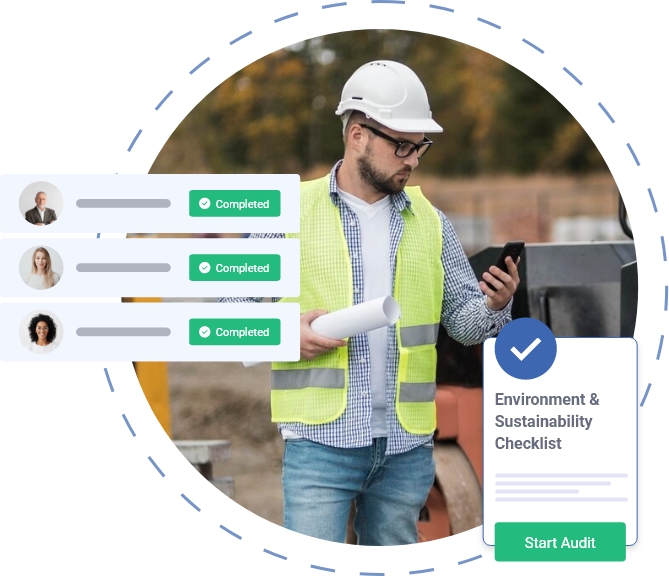
Empower your teams to identify and control risks
Effective health and safety management isn’t about head office imposing rules — it’s about creating an organisational culture where everyone takes responsibility for identifying hazards, reporting concerns, and working safely. Digital systems enable this cultural shift by making it simple for any team member to contribute to safety management.
Encourage proactive hazard reporting
Staff spot potential dangers during their daily work — unsafe conditions, equipment defects, procedural gaps, or emerging risks. When reporting these concerns requires filling in forms, finding managers, or sending emails, many hazards go unreported until they cause incidents.
OpsPal makes hazard reporting effortless. Any team member logs concerns in seconds from any device — capturing photographs, describing the hazard, noting the location, and indicating urgency. Reports immediately route to responsible managers who must acknowledge receipt and take action. This closed-loop process shows staff that reporting concerns leads to genuine improvements, encouraging proactive safety engagement rather than passive compliance.
Simplify incident reporting and investigation
When incidents occur, rapid reporting and thorough investigation prevent recurrence. Digital incident management captures essential information at the point of occurrence — what happened, who was involved, immediate actions taken, witness accounts, and photographic evidence of the scene.
Automatic workflows guide investigations through root cause analysis, identification of underlying failures, development of corrective actions, and verification of implementation effectiveness. Nothing falls through gaps or relies on memory — every incident generates tracked improvement activities with assigned owners and completion deadlines.
This systematic approach demonstrates to HSE inspectors and insurance providers that you take incidents seriously and learn from them rather than treating safety as a paperwork exercise.
Support competent health and safety performance
Staff can’t work safely if they don’t know the risks or haven’t been trained in control measures. OpsPal integrates training records with operational deployment — linking qualifications to the tasks and activities they permit.
Attach safety procedures, risk assessments and training materials to specific tasks. When someone performs a high-risk activity, they access relevant safety information at the point of need. This just-in-time learning reinforces safe working practices and provides reference materials for infrequent tasks where memory may be unreliable.
Track safety induction completion for new starters and contractors. Monitor role-specific training for activities requiring particular competencies. Maintain records of refresher training ensuring critical safety knowledge remains current. This competency management creates audit evidence showing you only permit appropriately trained personnel to undertake hazardous activities.
Demonstrate regulatory compliance and continuous improvement
Health and safety legislation places duties on employers to manage risks effectively, maintain safe working environments, and demonstrate competent safety management. HSE inspectors, insurance auditors, and certification assessors expect to see systematic approaches, not informal arrangements relying on individual knowledge.
Audit-ready compliance evidence
Digital health and safety management creates the permanent records regulators expect. Risk assessment registers showing comprehensive hazard identification and control measures. Inspection schedules demonstrating systematic monitoring. Incident records proving thorough investigation and learning. Training matrices evidencing competency management. Corrective action logs showing issues are resolved promptly.
Generate compliance reports instantly for regulatory inspections, insurance reviews, or management presentations. Filter by site, date range, activity type, or risk level. Export comprehensive documentation showing your systematic approach to health and safety management rather than spending days compiling evidence from scattered sources.
The complete audit trail shows what was done, when, by whom, and at which location. This transparency supports defence against allegations of safety failings and demonstrates due diligence in managing workplace risks.
Proactive compliance rather than reactive firefighting
Move from discovering compliance gaps during inspections to identifying issues before they become problems. Dashboards highlight overdue activities, outstanding corrective actions, sites with compliance gaps, or emerging risk patterns requiring attention.
Scheduled reviews ensure risk assessments remain current. Automatic escalation prevents compliance deadlines being missed. Standardised approaches eliminate variability in safety standards across different sites or managers. This proactive approach reduces regulatory exposure, supports insurance renewals, and protects your organisation’s reputation.
Continuous improvement driven by data
Track leading indicators (inspections completed, training delivered, hazards reported) alongside lagging indicators (incidents, near-misses, injuries) to understand safety performance holistically. Identify whether high incident rates result from operational hazards or poor reporting culture. See whether safety training correlates with improved compliance or reduced incidents.
Use this intelligence to target improvement initiatives where they’ll have greatest impact. Demonstrate to senior leadership, investors, or procurement clients that health and safety receives systematic attention and continuous improvement rather than being an afterthought when incidents occur.
Sector-agnostic, requirement-specific
OpsPal’s health and safety software adapts to your sector’s specific requirements without being prescriptive. Configure risk assessment templates for your industry’s typical hazards. Customise incident categories for your operational risks. Set inspection frequencies matching your regulatory obligations. Define compliance activities specific to your certifications or standards.
Whether you operate in leisure, hospitality, retail, education, healthcare, manufacturing, facilities management, or professional services, the system provides the structure for effective health and safety management whilst accommodating your unique operational context and regulatory environment.
Frequently Asked Questions
What is health and safety management software?
Health and safety management software is a digital platform that helps organisations identify workplace hazards, assess risks, implement controls, track compliance activities, manage incidents, and maintain the systematic safety management HSE regulations require. Instead of relying on paper risk assessments stored in filing cabinets, spreadsheets tracking multiple activities, and hoping staff remember safety procedures, the software centralises safety documentation, compliance tasks and incident records with real-time visibility of health and safety performance across operations.
The platform manages the core elements HSE expects organisations to maintain. Risk assessments (generic workplace, activity-specific, COSHH, fire, manual handling, lone working, DSE) are stored digitally with staff acknowledgement tracking showing who has read current versions. Compliance activities like statutory inspections, equipment testing, safety tours and workplace checks are scheduled as recurring tasks with dashboard visibility. For sensitive incident data like accidents and near-misses, organisations can embed Microsoft or Google Forms to control the data—keeping confidential information locked down with appropriate access controls at no extra cost to the organisation. Problem management tracks corrective actions through to completion. Training matrices monitor safety-critical qualifications like First Aid, confined space entry, working at height competencies.
Different industries face different health and safety priorities. Manufacturing sites manage machinery safety, COSHH assessments and production hazards. Leisure facilities emphasise pool safety, NPLQ qualifications and public-facing risk. Construction operations focus on site safety, temporary works and contractor management. Healthcare facilities manage clinical risks, infection control and patient handling. The software adapts to sector-specific hazards whilst providing the systematic structure that demonstrates safety management is planned, organised and monitored—the core requirements of HSE guidance.
Health and safety management software creates the audit trails regulators expect. When HSE inspectors visit, log reports generate evidence showing risk assessments are current and acknowledged, compliance tasks are completed consistently, incidents are investigated with corrective actions implemented, and staff hold required safety qualifications. This systematic documentation demonstrates that safety management is genuine daily practice rather than paperwork compiled reactively when enforcement notices arrive.
How does health and safety software help with HSE compliance?
Health and safety software helps with HSE compliance by creating systematic processes with complete audit trails that demonstrate safety management is planned, organised, monitored and reviewed—the core requirements of HSE’s Managing for Health and Safety guidance. The software schedules compliance activities like equipment inspections, fire checks, statutory testing and safety tours as recurring tasks with dashboard visibility showing which activities are current (green), due within 30 days (amber) or overdue (red). Managers see compliance status in real time rather than discovering gaps when HSE inspectors visit.
Risk assessments are stored digitally with staff acknowledgement tracking showing who has read current versions. When risk assessments are updated, staff receive in-app bell notifications and must acknowledge changes before the system marks them compliant. Version control with visual comparison shows exactly what changed between revisions—deleted content in red, added content in green. Review reminders appear 30 days before assessments are due, ensuring regular reviews occur as HSE expects rather than risk assessments becoming outdated and forgotten.
For sensitive incident data, organisations can embed Microsoft or Google Forms to control accident reports and near-miss records—keeping confidential information locked down with appropriate access controls at no extra cost to the organisation. Problem management tracks corrective actions identified from incidents, inspections or risk assessments through to completion, creating audit trails showing issues are resolved systematically. Training matrices monitor safety-critical qualifications, showing which staff hold required competencies and which have expired credentials requiring immediate action.
When HSE inspectors visit, log reports filtered by date range provide comprehensive evidence of systematic safety management—task completion records showing compliance activities occurred consistently, staff acknowledgement reports demonstrating safety information reached the people who need it, training matrix reports showing competency management, missed tasks reports identifying any gaps. This evidence demonstrates safety management is embedded in daily operations rather than temporarily adopted for inspection visits, which is exactly what HSE guidance requires.
What are the key challenges in managing workplace health and safety?
Managing workplace health and safety creates several persistent challenges. Ensuring all staff have read and understood current risk assessments rather than assuming they remember outdated versions, maintaining consistent completion of compliance tasks like equipment checks and safety inspections during busy operational periods, tracking which staff hold current safety-critical qualifications and which have expired credentials, investigating incidents systematically with documented corrective actions, and demonstrating to HSE inspectors that safety management is genuinely embedded in daily operations rather than paperwork compiled reactively when enforcement notices arrive.
Paper-based systems make these challenges exponentially harder. Risk assessments stored in filing cabinets mean managers don’t know who has actually read them. Compliance tasks tracked on clipboards or spreadsheets mean activities get forgotten during busy periods with no visibility of what’s overdue. Training records in separate files mean expired qualifications aren’t discovered until incidents occur or inspectors visit. When accidents happen, investigation notes live in email chains or manager notebooks with no systematic tracking of corrective actions through to completion.
Multi-site operations face additional complexity. Ensuring consistent safety standards across geographically dispersed locations, maintaining visibility of compliance status when you can’t physically see every site daily, coordinating training so all locations maintain required competencies, and identifying which sites need support before incidents or enforcement action occurs—all become nearly impossible with manual systems. Area managers request compliance updates from each site and manually compile data that’s already outdated by the time it arrives.
The fundamental challenge is making safety management systematic rather than reliant on individual memory and diligence. When safety information lives in filing cabinets, only people who remember to look find it. When compliance activities depend on someone remembering what’s due today, tasks get missed during operational pressure. When training records exist in disconnected spreadsheets, expired qualifications aren’t visible until they cause problems. Digital systems replace this fragmentation with connected visibility, ensuring nothing gets forgotten and providing the audit trails HSE expects.
How do you demonstrate health and safety compliance during inspections?
Demonstrating health and safety compliance during inspections requires providing comprehensive evidence that safety management is systematic, consistently maintained, and embedded in daily operations rather than paperwork compiled reactively when enforcement notices arrive. HSE inspectors want to see risk assessments that are current and acknowledged by staff, compliance tasks that are completed consistently over time, incidents that are investigated with corrective actions implemented and tracked, and staff who hold the qualifications their roles require. Paper-based systems make this evidence gathering stressful and time-consuming.
Health and safety software generates compliance evidence through log reports filtered by date range, department or activity type. Task completion records show which compliance activities occurred, by whom, when, and at which location—demonstrating equipment checks, safety inspections and statutory testing happened consistently over weeks, months or years. Staff acknowledgement reports prove who has read current risk assessments rather than assuming communication occurred. Training matrix reports provide instant qualification status across teams or the entire organisation, showing competency management is monitored continuously.
For sensitive incident data, organisations can embed Microsoft or Google Forms to control accident reports—keeping confidential information locked down whilst maintaining the systematic investigation records HSE expects. Problem management dashboards show corrective actions identified from incidents, inspections or risk assessments are tracked through to completion. Version control on risk assessments shows regular reviews occur with documented changes. Missed tasks reports identify any gaps in compliance activity completion, demonstrating transparency about where systems need improvement.
The audit trail is continuous rather than compiled for inspection visits. Every task completion, document acknowledgement, problem logged, and training record creates timestamped evidence showing genuine operational practice. When HSE inspectors ask, “How do you ensure staff have read risk assessments?” or “Show me your inspection records for the past six months,” log reports answer these questions instantly. This systematic documentation demonstrates that safety management meets the planned, organised and monitored requirements of HSE guidance—which is exactly what inspectors expect to see.
Why is digital health and safety management better than paper systems?
Answer:
Paper health and safety systems rely on physical documents stored in site offices, clipboards tracking compliance tasks, spreadsheets monitoring training, and hoping staff remember to check filing cabinets for updated risk assessments. When risk assessments change, you print new versions, file them, and email staff hoping they read attachments. When compliance tasks are due, you hope someone remembers to complete them and record completion on paper forms. When HSE inspectors visit, you frantically search through filing cabinets, binders and loose papers trying to compile evidence that safety management is systematic. This fragmented approach creates gaps where critical safety activities get forgotten.
Digital health and safety management software creates connected systems with automatic accountability. When risk assessments are updated, staff receive in-app bell notifications and must acknowledge changes before the system marks them compliant—you see exactly who has and hasn’t read the current version. When compliance tasks are due, the dashboard shows colour-coded status and weekly email reminders go to anyone with outstanding activities. For sensitive incident data, organisations can embed Microsoft or Google Forms to control accident reports—keeping confidential information locked down with appropriate access controls at no extra cost to the organisation.
Paper systems become unworkable for multi-site operations because you can’t see safety compliance across locations without visiting sites or requesting updates that are outdated before they arrive. Digital systems provide organisation-level dashboards showing compliance patterns across all sites, with drill-down to site level taking seconds. When staff leave, the system automatically transfers their tasks and outstanding problems to replacements, ensuring safety-critical activities continue regardless of staff changes.
The fundamental difference is visibility driving accountability. Paper systems hide compliance status until someone physically checks files or clipboards—overdue inspections are discovered when HSE visits or incidents occur. Digital dashboards make status visible continuously to everyone who needs to see it—staff see their safety responsibilities, managers see their team’s compliance, senior management sees organisation-wide patterns. This transparency creates the systematic safety management HSE guidance requires and provides the complete audit trails inspectors expect.
Book a Call With Our Team
We’re on hand for any questions you may have. Simply book a meeting using our booking system and we will talk you through any questions.