
Manufacturing Operations Software | Quality, Safety and Compliance
Improve with manufacturing operations software managing quality systems, equipment maintenance, safety compliance and production standards across your facilities. OpsPal helps manufacturers implement ISO 9001, maintain equipment reliability, ensure workplace safety, standardise work instructions and demonstrate compliance to customers and regulators — supporting operational excellence from shop floor to senior leadership. See how Hurleston Hall Hotel are benefiting from OpsPal
































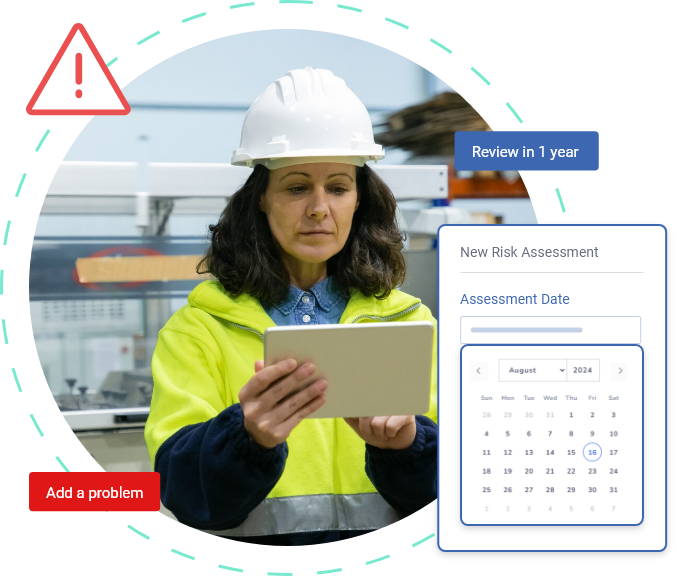
Standardise production and reduce variation
Manufacturing quality depends on consistent processes. When operators follow different methods, variation increases, defects rise and efficiency suffers. OpsPal provides the structure to standardise operations and reduce process variation across shifts, lines and facilities.
Digital work instructions and standard operating procedures Replace paper-based work instructions vulnerable to loss, damage or outdated versions remaining in circulation. Digital SOPs ensure operators always access the current version. Include photographs, diagrams, videos and step-by-step instructions guiding operators through setup, production, changeovers and quality checks.
When process improvements are identified, update work instructions once and deploy changes across all relevant workstations instantly. Track which operators have reviewed updated procedures, ensuring changes are communicated effectively before implementation.
Link work instructions to the products, machines or processes they cover. Operators access the specific instructions they need without searching through irrelevant documentation. This efficiency reduces setup time and eliminates confusion when operators rotate between workstations.
Shift handover and communication Production operates continuously across multiple shifts. Structured shift handovers ensure critical information transfers between outgoing and incoming teams — production status, quality issues, equipment concerns, material shortages or urgent customer requirements.
Digital handover checklists ensure consistency. Outgoing shift leaders confirm key information is passed on. Incoming shift leaders acknowledge receipt. Management sees handover completion across all shifts and facilities, identifying where communication gaps need addressing.
Multi-site manufacturing standardisation For manufacturers operating multiple production facilities, standardisation ensures consistent quality regardless of location. Deploy proven work instructions, quality procedures and safety protocols across all sites. When one facility develops process improvements, share learnings across your entire manufacturing operation.
Compare performance metrics across sites to identify best practice for replication and underperforming facilities requiring support.
Maintain equipment reliability and reduce downtime
Equipment reliability directly impacts production output, quality and costs. Reactive maintenance responding to breakdowns creates unplanned downtime, rushed repairs and production losses. Planned preventative maintenance (PPM) maximises equipment availability whilst minimising emergency failures.
Total Productive Maintenance (TPM) support Track preventative maintenance schedules for every production machine, facility equipment and utility system. Schedule maintenance based on time intervals, production cycles, or equipment condition. Automated reminders ensure maintenance is completed before equipment failures occur.
Autonomous maintenance checklists empower operators to perform routine care — cleaning, lubrication, inspection, minor adjustments. This first-line maintenance prevents problems whilst freeing specialist engineers for complex tasks. Track operator maintenance completion, identifying where additional training or supervision is needed.
Equipment history and maintenance records Maintain complete maintenance history for every asset. Track when maintenance was performed, what work was completed, parts replaced, costs incurred and downtime duration. Use this data to identify chronic problem equipment requiring replacement or redesign.
When equipment fails repeatedly, maintenance records support warranty claims, supplier performance discussions or capital expenditure business cases. Compare maintenance costs versus replacement costs to inform strategic asset management decisions.
Breakdown reporting and response When equipment fails unexpectedly, rapid reporting and response minimises production impact. Operators report breakdowns immediately from shop floor, capturing problem descriptions, suspected causes and photographs. Maintenance teams receive instant notifications and track repairs to completion.
Link breakdowns to root cause analysis and corrective actions. When the same equipment or failure mode recurs, systemic improvements are needed — better maintenance procedures, operator training, design modifications or replacement. Track whether corrective actions actually prevent recurrence.
Reducing downtime through visibility Real-time visibility shows which equipment is down, which maintenance is planned, and where capacity constraints exist across facilities. Production planning uses this information to schedule production around planned maintenance rather than being surprised by unplanned downtime.

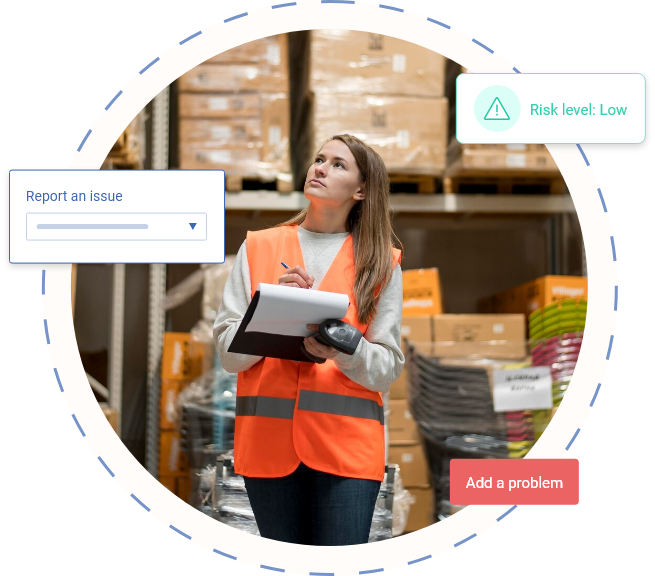
Ensure quality and support ISO compliance
Manufacturing quality systems require documented procedures, inspection records, non-conformance tracking and continuous improvement. OpsPal provides the structure supporting ISO 9001, AS9100 (aerospace), IATF 16949 (automotive), or GMP (pharmaceuticals) quality management systems.
Quality inspections and in-process checks Digital inspection checklists for incoming materials, in-process verification and final inspection ensure consistent quality assessment. Inspectors complete checks on mobile devices, recording measurements, observations and photographs. Out-of-specification results trigger automatic escalation to quality managers.
Statistical process control (SPC) data captured during production identifies trends before defects occur. When measurements approach specification limits, corrective action prevents non-conforming production rather than detecting defects after manufacture.
Non-conformance and corrective action When quality issues occur, structured investigation and corrective action prevent recurrence. Non-conformance reports capture what went wrong, potential root causes, immediate containment actions and investigation findings. Link quality issues to affected batches, customers and potential warranty exposure.
Corrective actions are assigned to owners with deadlines and tracked to verification of effectiveness. Management dashboards show open non-conformances, overdue corrective actions and repeat quality issues requiring strategic intervention.
Document control and procedure management ISO standards require controlled documents with version management, approval workflows and distribution tracking. Digital document management ensures operators access current procedures, quality plans and inspection specifications. Track who has acknowledged new or revised documents, evidencing effective communication.
Audit trails show complete history of document changes, approvals and distribution — exactly what ISO auditors expect to see during certification or surveillance audits.
Customer-specific requirements Automotive, aerospace, medical device and other regulated industries impose specific quality requirements. Track customer specifications, special characteristics, approval documentation and qualified personnel lists. Link customer requirements to the production processes, inspections and documentation they mandate.
Audit readiness Generate quality audit evidence instantly for ISO certification, customer audits or regulatory inspections. Show systematic quality management through inspection records, non-conformance investigation, corrective action effectiveness and continuous improvement. Demonstrate competent quality management rather than scrambling to compile evidence when audits are scheduled.
Manage safety and environmental compliance
Manufacturing environments present significant health, safety and environmental risks. Machinery, hazardous substances, manual handling, noise, heat and shift working require systematic risk management and regulatory compliance.
COSHH and hazardous substance management Track chemical inventory, COSHH assessments, exposure monitoring, control measures and training for every hazardous substance used in production. Link COSHH assessments to the processes using chemicals, ensuring operators access risk information and safe handling procedures when needed.
Monitor control measure effectiveness — local exhaust ventilation (LEV) testing, respiratory protective equipment (RPE) fit testing, health surveillance and exposure monitoring. Schedule mandatory inspections and examinations, ensuring compliance with Control of Substances Hazardous to Health regulations.
Machine safety and PUWER compliance Provision and Use of Work Equipment Regulations (PUWER) require equipment maintenance, safety inspection and operator training. Track machine guarding integrity, safety device function, thorough examination schedules and operator competency.
Permit-to-work systems control high-risk activities — lockout/tagout procedures, confined space entry, hot work permits and machinery maintenance. Digital permit management ensures authorisation, control measures and supervision are verified before work commences.
Risk assessments for manufacturing processes Maintain risk assessments covering machinery operation, manual handling, hazardous substances, noise exposure, lone working, shift patterns and all production activities. Link risk assessments to work instructions, ensuring control measures are embedded in how work is performed.
When incidents occur or processes change, update related risk assessments. Track assessment review cycles, ensuring nothing becomes outdated. Demonstrate systematic risk management to HSE inspectors and insurance providers.
Environmental compliance Track environmental permits, emission monitoring, waste disposal, energy consumption and water usage. Schedule environmental inspections, audits and regulatory reporting. Link environmental incidents (spills, emissions, regulatory breaches) to investigation workflows and corrective actions.
For manufacturers pursuing ISO 14001 or similar environmental management systems, operational data provides the evidence environmental performance is measured, monitored and improved.
Training and competency management Manufacturing safety depends on competent personnel. Track operator training, machine-specific qualifications, safety certifications, forklift licences and refresher training. Link training to the equipment or processes operators are qualified to work on.
Prevent unauthorised operation by linking competency to task allocation. Only appropriately trained and authorised operators complete high-risk activities. This systematic approach prevents competency failures that cause incidents or quality problems.
Frequently Asked Questions
What is manufacturing operations management software?
Manufacturing operations management software is a digital platform that helps manufacturing facilities manage production operations, workplace safety, equipment maintenance, staff training and compliance through connected systems accessible on any device. Instead of relying on paper-based procedures stored in site offices, clipboards tracking daily checks, and spreadsheets monitoring staff qualifications, the software centralises operational documentation, task management, risk assessments, training records and incident tracking—providing real-time visibility of facility performance whilst ensuring regulatory requirements like COSHH, PUWER and machinery safety are met consistently.
The platform addresses the operational challenges manufacturing facilities face. Workplace safety requires COSHH assessments for chemical handling, PUWER compliance for machinery operation, manual handling risk assessments and confined space entry protocols tracked systematically. Equipment maintenance needs preventative maintenance schedules, pre-use inspection checks and breakdown tracking with complete audit trails. Staff competency demands qualifications for machinery operation, forklift licences, confined space entry certification and first aid coverage. Production operations require shift handover procedures, quality check protocols and standard operating procedures accessible at the point of work.
Different manufacturing operations have different priorities. Food production facilities balance hygiene standards with process efficiency. Engineering workshops focus on machinery safety alongside quality control. Chemical manufacturing emphasises COSHH compliance and process safety management. Automotive component production coordinates equipment maintenance with production schedules. Electronics assembly manages ESD protocols alongside production quality. The software adapts to these different operational contexts whilst providing the systematic structure that ensures safety-critical activities happen consistently regardless of production pressures.
Manufacturing operations software replaces fragmented manual systems where machinery operating procedures exist as laminated sheets near equipment, maintenance logs are completed on paper then filed away, and training records live in supervisor notebooks. Digital systems create visibility that production managers need for shift coordination, provide the audit trails HSE inspectors expect, and support operational delivery without consuming limited supervisory time in administrative tracking.
How does manufacturing software help with workplace safety and COSHH compliance?
Manufacturing Operations – FAQ 2
Question: How does manufacturing software help with workplace safety and COSHH compliance?
Answer:
Manufacturing software helps with workplace safety and COSHH compliance by storing risk assessments digitally with staff acknowledgement tracking showing who has read current safety requirements. COSHH assessments for chemical handling, PUWER risk assessments for machinery operation, manual handling evaluations, confined space entry protocols and hot work permits are accessible on any device with version control tracking all changes. When assessments are updated to reflect new chemicals, modified machinery or changed processes, operators receive in-app bell notifications and must acknowledge changes before the system marks them compliant. This creates audit trails proving safety information reached production staff rather than assuming it occurred.
Safety-critical tasks are scheduled as recurring activities with dashboard visibility—daily machinery pre-use checks, weekly equipment inspections, monthly emergency equipment testing, PPE compliance verification. Colour-coded indicators show which tasks are available (green), started (amber), overdue (red) or completed (grey). Tasks and problems can have locations added, verifying operators were at the machine or production area when they signed off safety checks rather than marking activities complete from offices. Overdue safety checks automatically sort to the top of dashboards by time, ensuring nothing gets missed during production pressures or shift changeovers.
Training matrices track safety-critical qualifications at three levels—individual operator records showing machinery authorisations, forklift licences, confined space entry certification and first aid credentials, team reports displaying qualifications across production shifts, and organisation-wide dashboards showing training compliance across all facilities. Colour coding indicates whether qualifications are current (green), expiring within 90 days (amber), or expired (red). This visibility ensures supervisors don’t assign operators with expired machinery authorisation to equipment or permit confined space entry by uncertified staff. When operators leave, the system automatically transfers their safety-critical tasks to replacements, immediately highlighting any qualifications the new operator needs before working.
When HSE inspectors visit or ISO auditors assess workplace safety, log reports filtered by date range generate comprehensive evidence showing risk assessments are current and acknowledged, safety checks occurred consistently, incidents were investigated with corrective actions implemented, and operators held required competencies. Problem management tracks equipment failures, near-miss incidents and safety concerns through to resolution with photo evidence and dashboard visibility. This systematic documentation demonstrates safety management is genuinely embedded in production operations rather than paperwork compiled reactively when enforcement notices arrive.
What are the main challenges in managing manufacturing operations?
Managing manufacturing operations creates persistent challenges because production demands, workplace safety and equipment reliability must be balanced simultaneously whilst maintaining quality standards. Ensuring machinery pre-use checks, COSHH compliance and PPE requirements are followed consistently across all shifts regardless of production pressures. Maintaining equipment through preventative maintenance schedules when breakdowns create urgent repair demands. Tracking which operators hold current machinery authorisations, forklift licences and confined space entry certifications when shift patterns rotate weekly. Coordinating shift handovers so incoming teams understand equipment status, production issues and safety concerns from the previous shift without critical information getting lost.
Paper-based systems make these challenges exponentially harder. Risk assessments stored in site offices mean operators can’t reference COSHH protocols or machinery safety procedures at the point of work. Clipboards tracking daily checks get forgotten when production targets create time pressure. Training records in supervisor notebooks mean shift leaders don’t know which operators are authorised for which equipment until someone attempts to use machinery they’re not qualified for. When equipment fails or safety incidents occur, paper logbooks provide no systematic tracking of investigation outcomes, corrective actions implemented, or whether recurring problems indicate deeper issues requiring preventative intervention.
Multi-site manufacturing organisations face additional complexity. Ensuring consistent safety standards across production facilities when each site develops its own interpretation of procedures. Maintaining visibility of equipment maintenance status when production managers can’t physically oversee every facility daily. Coordinating training so all sites maintain required machinery operation qualifications and safety certifications. Demonstrating HSE compliance readiness across the estate when inspectors visit any location. Head office needs organisation-wide patterns for risk management whilst site managers need operational detail for shift-by-shift coordination.
Staff turnover and contractor management compound operational challenges. When experienced operators or maintenance technicians leave, operational knowledge walks out with them—machinery quirks, equipment maintenance history, production troubleshooting expertise all vanish. New operators need induction into site-specific safety procedures and equipment authorisation before working independently. Contractors performing maintenance or modifications need clear communication about site safety requirements, permit-to-work systems and emergency procedures. Paper handovers during staff changes mean critical information gets lost, maintenance activities aren’t tracked systematically, and safety-critical knowledge becomes fragmented across individual memories rather than accessible operational systems.
How do manufacturing facilities manage equipment maintenance and compliance?
Manufacturing facilities manage equipment maintenance and compliance by scheduling preventative maintenance, statutory inspections and equipment checks as recurring digital tasks with dashboard visibility showing completion status and tracking who serviced what, when, and at which location. Daily machinery pre-use checks, weekly lubrication schedules, monthly pressure system inspections, quarterly lifting equipment examinations and annual LOLER inspections appear as assigned tasks with colour-coded indicators—green for available, amber for started and red for overdue. This visual management means maintenance managers see exactly which equipment requires attention and which statutory inspections have approaching due dates, preventing compliance gaps and unplanned downtime.
Equipment operating procedures, maintenance instructions and troubleshooting guides are stored digitally with operator acknowledgement tracking. When procedures are updated to reflect machinery modifications, manufacturer guidance changes or lessons learnt from breakdowns, operators receive in-app bell notifications and must acknowledge changes before the system marks them compliant. Version control with visual comparison shows exactly what changed between revisions, ensuring operators understand updated safety requirements or operational adjustments rather than assuming they remember outdated versions. Procedures can include embedded videos, photos and hyperlinks to manufacturer documentation, supporting operators and maintenance technicians at the point of work.
Problem management with photo evidence captures equipment failures, maintenance issues and performance concerns immediately. When machinery pre-use checks identify faults or operators report problems during production, maintenance teams receive task notifications with details and photo evidence. Dashboard visibility tracks problems through to resolution, showing which equipment has outstanding issues requiring attention before the next shift. The system tracks problem resolution time for management review, helping identify recurring equipment failures that indicate preventative maintenance inadequacy or equipment replacement needs.
When HSE inspectors assess PUWER compliance, ISO auditors review maintenance systems, or insurance assessors verify statutory inspection currency, log reports filtered by date range generate comprehensive evidence. Task completion records show which maintenance activities occurred, by whom, when, and on which equipment. Training matrix reports demonstrate maintenance technicians and operators hold required competencies. Problem logs reveal how equipment failures are identified, investigated and resolved systematically. This systematic documentation demonstrates equipment maintenance and statutory compliance are genuinely embedded in operations rather than paperwork compiled reactively when auditors arrive.
Why do manufacturing facilities need digital operations management software?
Manufacturing facilities need digital operations management software because paper-based systems—clipboards tracking machinery checks, procedures stored in site offices, training records in supervisor notebooks—don’t provide the visibility required to maintain safe production operations during shift work when equipment failures and production targets create competing pressures. When machinery pre-use checks rely on operators remembering to complete clipboards before starting equipment, checks get missed during production urgency. When COSHH assessments live in filing cabinets, operators can’t reference chemical safety protocols at the point of work. When training records exist in separate notebooks, shift leaders assign operators to machinery they’re not authorised for until incidents expose qualification gaps. These disconnects between intended safety standards and actual practice are where workplace accidents, HSE enforcement actions and production incidents occur.
The software creates systematic accountability through visibility. Operators see their assigned safety checks and production tasks with colour-coded status showing what’s overdue. Shift supervisors see operational performance across all production areas without walking the facility or requesting updates from busy operators. Production managers see organisation-wide patterns across multiple sites within seconds, identifying which facilities maintain equipment maintenance schedules and which have overdue statutory inspections before HSE visits or equipment failures create problems. This transparency means safety-critical activities and maintenance schedules become visible before gaps create incidents rather than being discovered retrospectively through accident investigations or breakdown analysis.
Multi-site manufacturing organisations face exponentially greater complexity than single facilities. Ensuring consistent workplace safety standards across production sites when each facility handles different products, processes or equipment. Maintaining equipment maintenance visibility when production managers can’t physically oversee every facility’s machinery status. Coordinating training so all sites maintain required machinery operation qualifications, COSHH competency and confined space entry certifications. Demonstrating HSE compliance readiness when inspectors visit any location. Digital platforms provide organisation-level dashboards showing compliance patterns across all sites, with drill-down to facility level providing specific equipment and operator detail. When new production facilities open, they simply log on, and everything they need is available—procedures, task templates, and risk assessments, all inherited from proven operational frameworks.
The fundamental business value is protecting both worker safety and production reliability whilst respecting limited supervisory capacity. When equipment maintenance is visible continuously, managers prevent breakdowns through preventative action rather than reacting to failures. When training matrices show operator qualifications, shift leaders ensure appropriately authorised staff operate machinery. When safety checks are tracked digitally with automatic handover during shift changes, nothing gets forgotten between production periods. When HSE inspectors visit, log reports generate evidence instantly demonstrating systematic safety management. This approach eliminates the operational chaos paper systems create whilst maintaining the production efficiency and safety compliance manufacturing operations require.
Book a Call With Our Team
We’re on hand for any questions you may have. Simply book a meeting using our booking system and we will talk you through any questions.