
Operations Software for Sports Clubs | Sport, Leisure and Culture
Run your sports club more efficiently with operations software managing facilities, volunteers, coaching qualifications and safeguarding compliance. OpsPal helps amateur sports clubs, community sports organisations, national governing bodies and sports facilities manage operations that support participation and performance — trusted by sports organisations including Badminton England and sports clubs across the UK. See how Wellington Health & Fitness benefit from OpsPal








































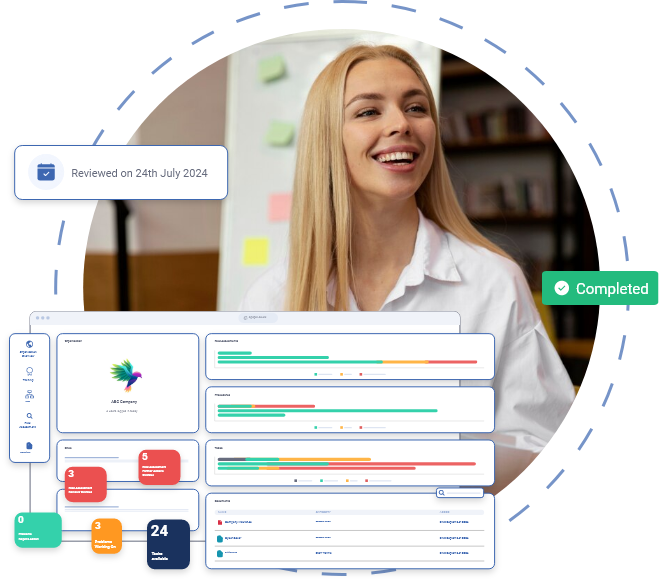
Operations - Sports Clubs facility management
Operations Software for Sports Clubs
Sports clubs operate diverse facilities — pitches, courts, pavilions, clubhouses, changing facilities, equipment stores and training areas. Whether you’re a football club, rugby club, cricket club, tennis club, athletics club or multi-sport organisation, OpsPal provides the operational structure ensuring safety, compliance and member satisfaction.
Facility maintenance and groundskeeping
Track pitch maintenance, court resurfacing, equipment inspection and building upkeep. Schedule groundskeeping tasks — mowing, line marking, pitch renovation, irrigation, drainage maintenance. Digital checklists ensure groundstaff complete essential tasks even during busy fixture periods.
Preventative maintenance reduces costly emergency repairs. Schedule annual maintenance for floodlights, fencing, nets, goals, scoreboards and club equipment. Track maintenance history for each asset, supporting warranty claims or replacement business cases when equipment reaches end-of-life.
Problem reporting captures maintenance issues, vandalism or safety concerns immediately. Volunteers and members photograph problems using their phones. Facilities managers or groundstaff receive notifications and track repairs to completion. Nothing gets forgotten even when volunteers change or committee members rotate.
Clubhouse and hospitality operations
Many sports clubs operate bars, catering or function hire. Track opening procedures, stock management, cleaning schedules, food safety compliance (if applicable) and licensing requirements. Digital checklists ensure consistent standards regardless of which volunteers are on duty.
For clubs with changing facilities, track cleaning schedules, maintenance issues and safety compliance. Ensure changing rooms, showers and toilets maintain standards that reflect well on your club and encourage participation.
Multi-venue and multi-pitch coordination
Clubs operating multiple pitches, courts or training venues need visibility across all locations. Schedule maintenance appropriately so facilities are match-ready when needed. Compare usage patterns and maintenance requirements across different facilities, informing strategic decisions about facility investment or usage allocation.
Sports clubs using hired facilities (schools, leisure centres, community centres) track venue risk assessments, emergency procedures and key holder responsibilities. Ensure coaches and volunteers understand venue-specific safety requirements before sessions commence.
Manage coaches, volunteers and staff
ports clubs depend on volunteers — coaches, officials, committee members, groundstaff, administrators and parent helpers. OpsPal helps coordinate this diverse workforce whilst ensuring everyone meets safeguarding and qualification requirements.
Coaching qualifications and development
Track coaching qualifications across all your coaches. Monitor Level 1, 2, 3 coaching awards, specialist qualifications (goalkeeping, strength and conditioning, sports-specific technical awards) and coaching licence renewals. Automated reminders ensure coaching qualifications don’t lapse before the season starts.
Link coaching qualifications to the age groups or squads coaches can lead. Only appropriately qualified coaches work with specific teams. This systematic approach protects players, supports coach development and demonstrates governance to your national governing body (NGB).
CPD (Continuing Professional Development) tracking supports coach development. Record training courses attended, workshops participated in, and self-directed learning completed. Many NGBs require annual CPD for licence renewal — OpsPal tracks completion against these requirements.
First aid qualifications are essential for coaches and matchday volunteers. Track first aid currency, automated reminders for renewals, and ensure sufficient first aiders are available for training sessions and matches.
Safeguarding and DBS compliance
Safeguarding is paramount for sports clubs working with children and young people. Track DBS checks for all coaches, volunteers and officials working with juniors. Monitor safeguarding training completion. Automated reminders ensure renewals don’t lapse.
Link safeguarding compliance to role allocation. Only appropriately checked and trained volunteers work with junior teams or vulnerable participants. Generate safeguarding reports for committee meetings, AGMs or NGB audits showing systematic safeguarding management.
Record safeguarding concerns or incidents using structured reporting workflows. This systematic approach demonstrates safeguarding governance to your NGB, Sport England or local safeguarding partnerships. Complete audit trails show concerns are taken seriously, investigated appropriately and learnings implemented.
Volunteer coordination and induction
New volunteers need structured induction covering club policies, emergency procedures, safeguarding responsibilities, code of conduct and role-specific requirements. Digital induction ensures consistent onboarding regardless of which committee members supervise new volunteers.
Track volunteer roles, responsibilities and contributions. Recognise volunteer involvement for annual awards, long service recognition or funding applications where volunteer hour valuations support grant bids.

Health and safety for sports clubs
Sports clubs carry significant health and safety responsibilities. Players, spectators, volunteers and visitors must be protected through systematic risk management and emergency preparedness.
Risk assessments for sports activities
Maintain risk assessments covering training sessions, matches, tournaments, away fixtures, facility use and sports-specific hazards. Different sports present different risks — contact sports injury risks, athletics throwing events, aquatic sports, adventure sports or winter sports all require specific risk assessment.
Update risk assessments when circumstances change — new facilities, different age groups, modified activities or incident learning. Communicate revisions to coaches and volunteers instantly. Track who has reviewed updated assessments, ensuring consistent safety management.
Link risk assessments to the activities they cover. Coaches access relevant risk assessments when planning sessions. This integration ensures risk management influences activity design rather than existing as separate paperwork.
Emergency procedures and incident management
Document emergency action plans covering serious injuries, missing children, severe weather, facility evacuation and medical emergencies. Ensure all coaches, volunteers and key officials know their emergency responsibilities.
Incident reporting captures accidents, near-misses and injuries immediately. Record what happened, treatment provided, witnesses present and immediate actions taken. Investigate significant incidents to identify root causes and corrective actions preventing recurrence.
Insurance claims and legal defence require comprehensive incident records. Digital incident management creates the audit trails insurers and solicitors need if claims arise months or years after events.
Equipment safety and inspection
Sports equipment requires regular safety inspection — goals, posts, nets, mats, trampolines, gymnastics equipment, protective equipment and specialist sports gear. Schedule inspections according to manufacturer guidance and usage intensity.
Track inspection history, defect identification and repair completion. When equipment fails safety inspections, remove from use until repairs are completed or replacement sourced. This systematic approach prevents equipment-related injuries and demonstrates duty of care.
National governing body and competition compliance
Sports clubs affiliated to national governing bodies must meet specific standards for facility quality, coach qualifications, safeguarding compliance and governance. OpsPal supports these requirements across different sports.
NGB affiliation and standards
NGBs set minimum standards for affiliated clubs covering safeguarding policies, coaching qualifications, facility standards, insurance coverage and governance arrangements. Track compliance with your NGB’s requirements, generating evidence for affiliation renewals or inspection requests.
Competition hosting requires specific standards. If your club hosts league fixtures, cup matches or tournaments, demonstrate that facilities, officials and emergency provision meet competition requirements. Digital checklists for matchday preparation ensure consistency every fixture.
Clubs aspiring to higher competition levels need evidence of improved standards. Track facility investments, coaching qualification improvements, youth development structures and governance enhancements. Use this evidence to support applications for promotion or competition franchise bids.
Working with organisations like Badminton England
National governing bodies increasingly use digital systems for club development and quality assurance. Organisations like Badminton England work with clubs to improve standards, develop coaching pathways and increase participation.
OpsPal provides clubs with operational systems meeting NGB expectations whilst supporting strategic development. Track coaching qualifications, facility maintenance, safeguarding compliance and volunteer development. Generate reports showing systematic club management, supporting funding applications and development programme eligibility.
Volunteer governance and accountability
Sports clubs rely on volunteer committees and board members. Demonstrate accountability through systematic operational management. Committee members see operational performance without requiring detailed involvement in day-to-day management.
Generate reports for committee meetings, AGMs or trustee meetings showing facility maintenance, qualification compliance, safeguarding governance and incident trends. This transparency supports informed governance decisions and demonstrates effective stewardship to members, funders and regulators.
Supporting club growth and development
As clubs grow — more teams, expanded facilities, increased membership — operational systems prevent chaos. Standardise procedures across teams and age groups. Ensure coaching standards remain consistent as more volunteers become involved. Maintain safety and safeguarding compliance as complexity increases.
Clubs accessing Sport England funding, local authority grants or foundation support need evidence of well-managed operations. OpsPal provides the audit trails, training records and governance evidence funders expect, supporting grant applications and accountability reporting.

Frequently Asked Questions
What is sports club management software?
Sports club management software is a digital platform that helps sports clubs, community sports venues and cultural facilities manage operations, compliance, volunteer coordination and facility safety through connected systems accessible on any device. Instead of relying on paper-based procedures, spreadsheets tracking volunteer rotas, and hoping committee members remember compliance deadlines, the software centralises operational documentation, task management, risk assessments, training records and facility maintenance—providing visibility of club operations whilst ensuring regulatory requirements and governing body standards are met consistently.
The platform addresses the unique challenges sports clubs face. Volunteer-dependent operations need clear task assignment and handover systems when availability fluctuates. Facility management requires equipment safety checks, maintenance schedules and incident tracking with complete audit trails. Coaching standards demand qualified staff holding current certifications for their sport—FA coaching badges, LTA qualifications, British Gymnastics, England Athletics, Swim England teaching awards. Health and safety compliance requires risk assessments acknowledged by volunteers, first aid coverage tracked, and safeguarding policies read by everyone working with young people.
Different sports and cultural organisations have different operational priorities. Community sports clubs balance volunteer coordination with member safety whilst maintaining governing body affiliation standards. Professional sports facilities focus on operational excellence alongside regulatory compliance. Multi-sport venues manage diverse activities with different risk profiles and qualification requirements. Theatre and arts venues coordinate technical operations, front-of-house management and accessibility compliance. The software adapts to these different contexts whilst providing the systematic structure that distinguishes professionally-managed organisations from those struggling with paper-based chaos.
Sports club management software replaces fragmented manual systems where operational knowledge lives in committee members’ heads, procedures exist as Word documents on someone’s computer, and volunteer tasks are coordinated through WhatsApp groups. Digital systems make operational information accessible, visible and accountable—ensuring clubs maintain standards regardless of volunteer turnover or committee changes.
How does sports club software help with volunteer management?
Sports club software helps with volunteer management by providing clear visibility of who’s responsible for which tasks, tracking completion status, and ensuring operational continuity when volunteer availability fluctuates. Task management assigns responsibilities to individuals or teams—facility opening procedures, equipment checks, coaching session setup, maintenance activities—with dashboard visibility showing which tasks are available (green), started (amber), overdue (red) or completed (grey). Volunteers see their assigned responsibilities clearly rather than relying on verbal communication or assumption about what needs doing.
The system creates accountability through transparency without creating bureaucratic burden. Volunteers access their task list through any device, complete activities as they occur, and managers see completion status through dashboards without constantly asking, “Has anyone done the equipment check?” Cross-department visibility means volunteers can see what needs covering when colleagues are unavailable—committee members understand exactly what the absent facilities manager usually does, coaching coordinators see which administrative tasks are outstanding, and duty volunteers identify what needs attention during their session.
When volunteers leave the club or reduce their availability, the system automatically transfers their tasks and outstanding problems to replacements, ensuring nothing gets missed during handovers. This continuity is critical for volunteer-dependent organisations where operational knowledge traditionally walks out when committee members step down or volunteers move on. New volunteers simply log on and see exactly what responsibilities they’re inheriting rather than piecing together information from multiple people’s partial recollections.
Training matrices track volunteer qualifications at three levels—individual records showing personal certifications, team reports displaying qualifications for specific volunteer groups, and organisation-wide dashboards showing training compliance across the club. Coaches see which qualifications are current, expiring within 90 days, or expired. Safeguarding coordinators verify DBS checks and safeguarding training status. First aid officers monitor which volunteers hold current emergency care certifications. This visibility ensures clubs maintain safe volunteer coverage for all activities whilst respecting that volunteers give time freely—the system supports rather than constrains their contribution.
What are the main challenges in running community sports clubs?
Running community sports clubs creates persistent challenges that paid staff operations don’t face. Volunteer availability fluctuates—people have work commitments, family responsibilities, holidays—meaning operational tasks can’t rely on fixed rotas. Committee turnover means operational knowledge leaves when experienced volunteers step down, forcing new committee members to rediscover how things work. Maintaining facility safety and equipment standards requires consistent completion of checks and maintenance regardless of who’s available. Coordinating coaching standards when volunteers hold different qualifications that expire at different times across multiple sports or age groups.
Paper-based systems make volunteer coordination nearly impossible. Procedures stored on someone’s personal computer mean volunteers can’t access operational information when that person’s unavailable. Task lists shared through WhatsApp or email chains create confusion about who’s responsible for what. Training records in spreadsheets mean coaches don’t know which volunteers are qualified to supervise sessions. When problems occur—broken equipment, facility issues, safeguarding concerns—paper logbooks provide no systematic tracking of who’s responsible for resolution or whether actions are completed.
Compliance obligations create additional pressure for volunteer-led organisations. Governing body affiliation requires clubs maintain coaching standards, safeguarding policies and facility safety. Insurance validity depends on risk assessments being current and acknowledged by volunteers. Local authority facility agreements mandate equipment maintenance schedules and health and safety compliance. Safeguarding requirements demand DBS checks, training records and policy acknowledgement for anyone working with children or vulnerable adults. Meeting these obligations whilst respecting that volunteers give time freely requires systems that support rather than burden volunteer contribution.
Financial constraints mean sports clubs can’t hire administrators to manage operations or purchase expensive specialist software. Limited budgets prioritise coaching equipment, facility hire and competition entry over operational management systems. This means clubs rely on volunteers handling compliance alongside their primary roles—coaches managing safeguarding whilst coaching sessions, facilities managers coordinating maintenance whilst opening venues, treasurers tracking training records whilst managing finances. Without systematic operational support, compliance becomes overwhelming and operational standards drift until governing body audits or incidents force intervention.
How do sports clubs maintain safeguarding and coaching standards?
Sports clubs maintain safeguarding and coaching standards by tracking DBS checks, safeguarding training, coaching qualifications and policy acknowledgement through digital training matrices with coloured status indicators. Individual volunteers access their complete record through the notification bell area, seeing which certifications are current, which expire soon, and which need renewal. Club welfare officers see team reports showing safeguarding compliance across coaching groups. Committee members see organisation-wide dashboards showing training status across the entire volunteer base, identifying who needs DBS renewals or safeguarding refresher courses.
Digital procedures store safeguarding policies, codes of conduct and operational protocols with staff acknowledgement tracking. When policies are updated to reflect new governing body guidance or regulatory changes, volunteers receive in-app bell notifications and must acknowledge changes before the system marks them compliant. Version control with visual comparison shows exactly what changed between revisions, ensuring volunteers understand updated safeguarding requirements rather than assuming they remember outdated versions. This creates audit trails proving safeguarding information reached everyone working with young people or vulnerable adults.
Coaching qualifications are tracked with the same visibility—FA coaching badges, LTA qualifications, British Gymnastics certifications, England Athletics coaching awards, and Swim England teaching credentials. Colour coding shows which qualifications are current (green), expiring within 90 days (amber), or expired (red). This visibility ensures club coordinators don’t roster coaches with expired qualifications to lead sessions. When governing body audits or Ofsted inspections occur, training matrix reports provide instant evidence of systematic safeguarding and coaching standards maintained over time.
For sensitive safeguarding concerns or incident reports, clubs can embed Microsoft or Google Forms to control confidential data—keeping safeguarding information locked down with appropriate access controls at no extra cost to the organisation. Problem management tracks welfare concerns, facility safety issues and equipment maintenance through to resolution with dashboard visibility. When volunteers leave or reduce availability, the system automatically transfers their safeguarding responsibilities to replacements, ensuring continuity of welfare protection regardless of volunteer turnover.
Why do sports clubs need digital operations software?
Sports clubs need digital operations software because volunteer-dependent organisations face unique challenges that paper-based systems can’t solve. When operational knowledge lives in committee members’ heads, volunteer turnover creates chaos—new committee members spend months rediscovering how things work rather than focusing on club development. When procedures exist as Word documents on someone’s personal computer, volunteers can’t access operational information when that person’s unavailable. When task lists are shared through WhatsApp groups, responsibility becomes ambiguous and activities get forgotten during busy periods. These gaps are where safeguarding failures, facility safety incidents and governing body compliance problems emerge.
The software creates systematic operations that survive volunteer changes. When new committee members join, they simply log on and everything they need is available—procedures, task templates, risk assessments, training frameworks all inherited from proven operational systems. When volunteers step down or reduce availability, the system automatically transfers their tasks and outstanding problems to replacements, ensuring nothing gets missed during handovers. This continuity means clubs maintain operational standards regardless of who’s currently on the committee or coaching team.
Governing body compliance becomes manageable rather than overwhelming. Safeguarding policies are stored digitally with volunteer acknowledgement tracking proving everyone working with young people has read current guidance. Training matrices show coaching qualifications, DBS checks and safeguarding training status with colour-coded indicators highlighting what needs renewal. Risk assessments are current and acknowledged by volunteers. When governing body audits occur, log reports generate comprehensive evidence instantly rather than scrambling to compile folders demonstrating compliance.
The fundamental value is respecting volunteer time whilst maintaining professional standards. Digital systems eliminate the administrative burden paper creates—volunteers complete operational tasks through mobile devices rather than updating spreadsheets, managers see status through dashboards rather than chasing people for updates, and audit trails are generated automatically rather than compiled manually. This efficiency means volunteers focus on coaching, facility development and club growth rather than drowning in compliance paperwork. The club demonstrates systematic operations that protect members, satisfy insurers and meet governing body standards—all whilst working within the limited budgets community sports organisations face.
Book a Call With Our Team
We’re on hand for any questions you may have. Simply book a meeting using our booking system and we will talk you through any questions.