
Leisure Centre Management Software | Multi-Site Operations & Compliance
Streamline operations across leisure centres, swimming pools, gyms and sports facilities with software that handles the compliance, safety and operational essentials — so your teams can focus on getting people active. OpsPal helps leisure trusts, universities, independent operators and local authority centres manage health and safety, pool operations, equipment maintenance, training records and accreditation requirements across single sites or national estates — without drowning in paperwork. Built by leisure professionals who understand Quest assessments, ukactive TAS, RLSS pool safety and the daily reality of running busy facilities.
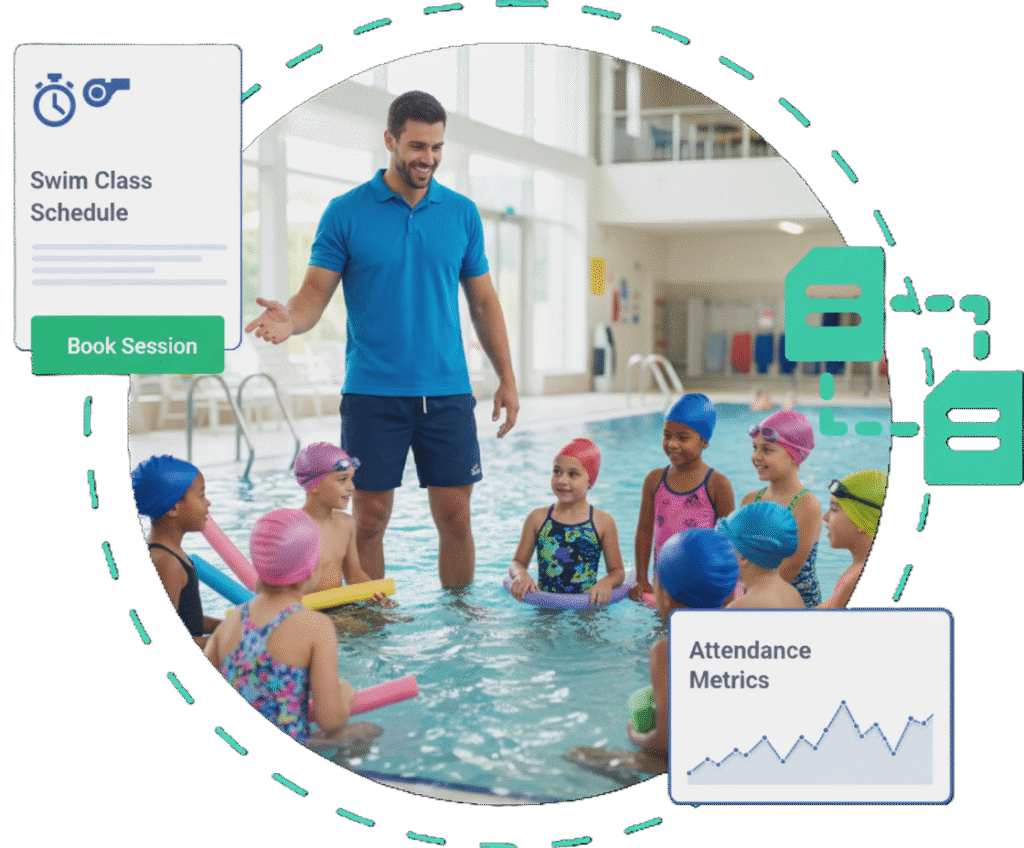







































Built for leisure operations, not borrowed from other industries
Leisure centres aren’t hotels or gyms-only. You’re managing swimming pools with complex plant operations, sports halls with varied programmes, fitness suites with equipment maintenance schedules, and often cafes, soft play, or specialist facilities. Your operations software needs to understand this complexity, not force you to adapt leisure-specific requirements into generic business tools.
OpsPal was designed from the ground up for leisure centre operations.
You can add pool water testing schedules that comply with the guidance of the Pool Water Treatment Advisory Group (PWTAG). Lifeguard rotation tracking integrated with qualification expiry monitoring. Plant room temperature checks with escalation. Inspection schedules for gym equipment are linked to manufacturer guidance and PUWER requirements via hyperlinks if that is what your staff need. Fire evacuation procedures specific to pools where patrons may be in swimwear. The software understands leisure because it was built by people who’ve worked in leisure.
Your booking system handles the customer-facing side brilliantly — memberships, class bookings, court reservations, direct debits.
OpsPal handles what happens behind the scenes
To keep your facilities safe, compliant and operational. These systems work alongside each other, not in competition. While Legend or Gladstone manage your member journey, OpsPal ensures your pool plant is running correctly, your lifeguards hold current qualifications, your risk assessments are reviewed, and your maintenance doesn’t slip through the cracks.
Multi-site operations gain consistency without losing local flexibility. Standardise your normal operating procedures (NOPs) and emergency action plans (EAPs) across all pools whilst accommodating site-specific variations. Head office sees real-time compliance across the estate. Area managers identify which sites need support. Centre managers access everything their team needs without trawling through head office servers or waiting for email attachments.
Pool operations, aquatics safety and compliance management
Swimming pools are high-risk environments requiring constant vigilance. Pool water testing, plant room monitoring, lifeguard deployment, emergency equipment checks — miss any element and you’re exposed to serious safety or regulatory consequences. OpsPal brings these critical tasks into one system with complete accountability.
Pool water testing
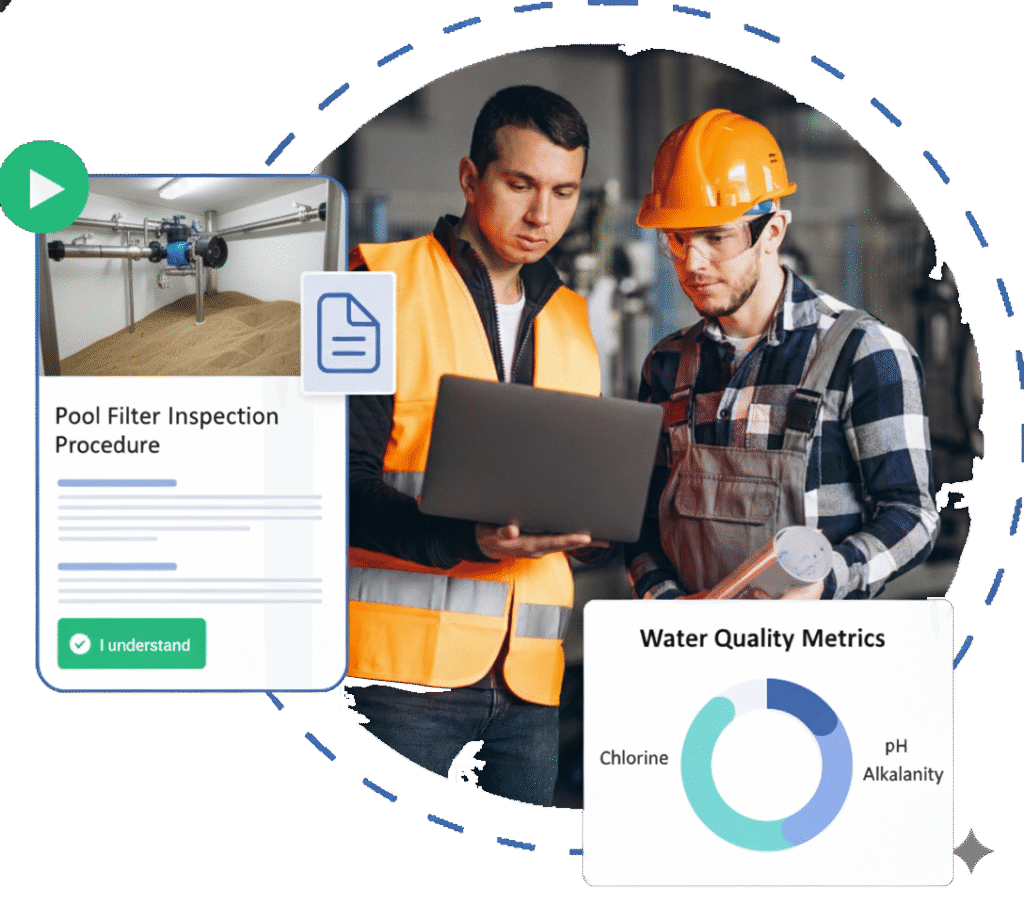
Schedules follow your PWTAG guidance requirements — pH, chlorine, alkalinity, temperature checks at prescribed intervals. Digital recording eliminates illegible paper sheets and creates audit trails showing exactly when tests occurred, which qualified staff member conducted them, and immediate escalation if results fall outside parameters. Historical trending identifies if your plant is drifting or if specific times show recurring issues requiring attention.
Plant room operations
Track temperature monitoring for legionella control (HSE L8 compliance), backwashing schedules, chemical dosing records, and equipment running hours. Automated reminders ensure statutory inspections never get missed — annual pressure system examinations, electrical testing schedules, filtration system servicing. Link these tasks to qualified plant operators so only appropriately trained staff can sign off critical plant operations.
Lifeguard management integrates qualification tracking with daily operations
See at a glance which lifeguards hold current RLSS National Pool Lifeguard Qualification, when renewals are due, and whether they’ve completed continuing professional development hours. Link this to shift patterns so you’re deploying appropriately qualified staff for different pool configurations. Swimming lesson programme compliance tracks teacher qualifications (STA, ASA, Swim England), DBS checks, safeguarding training and insurance requirements.
Emergency equipment daily checks
First aid kits, spinal boards, defibrillators, rescue poles — become digital routines assigned to opening staff with photo evidence capabilities. No more wondering if yesterday’s opening check actually happened or if someone just signed a sheet retrospectively.
Facilities maintenance and equipment management
For gyms, sports halls and changing areas operates on the same platform. Gym equipment servicing schedules, sports hall apparatus inspections under PUWER, cleaning protocols for changing rooms and toilets, HVAC maintenance, fire safety equipment testing — all tracked with automated reminders and contractor certification records. Problem reporting captures maintenance issues, safety concerns or cleanliness problems with photo evidence, ensuring facilities teams resolve issues without lengthy email chains.

Quest, ukactive TAS and industry accreditation support
Quest accreditation
Or ukactive’s Active Standard (TAS), and other industry frameworks aren’t just nice-to-haves — they’re increasingly expected by local authorities, partners and customers who want assurance that leisure facilities meet professional standards. OpsPal provides the operational foundations these assessments examine.
Quest assessors evaluate how effectively you deliver customer service, manage operations and demonstrate community impact. They’ll want evidence of systematic management — documented procedures, staff training records, maintenance schedules, incident management, continuous improvement. OpsPal structures these requirements into your daily operations rather than creating a parallel “assessment mode” activated only when assessors visit.
The Active Standard (TAS), launched by ukactive in 2024, assesses health and safety compliance, professional standards, safeguarding measures and data protection against strict criteria. Facilities achieving TAS demonstrate they take safety, inclusion and compliance seriously — building customer confidence and facility reputation. OpsPal’s architecture aligns with TAS requirements by providing audit trails, qualification tracking, policy version control and incident management that assessors need to verify.
Centralised document libraries
Ensure every site operates from current versions of risk assessments, NOPs, EAPs and operational procedures. When you update a poolside emergency procedure or revise a risk assessment, every centre receives the new version instantly with automated notifications to relevant staff. Assessors can verify everyone’s working from current documentation and that reviews occur on schedule.
Staff qualification and training management
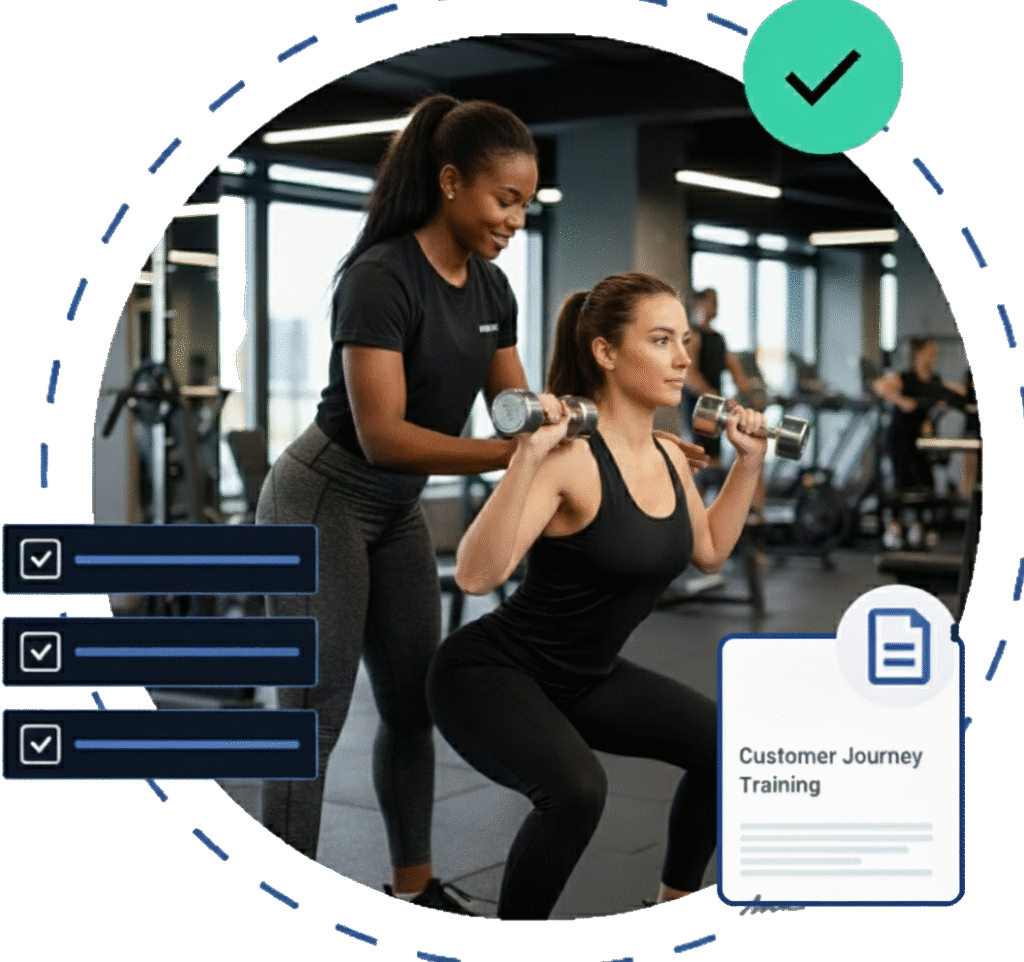
Sits at the heart of both Quest and TAS assessments. Track every certification that keeps your centre legal and operational — RLSS lifeguard qualifications, Swim England teaching certificates, REPs registered exercise professionals, first aid certificates, food hygiene certificates, safeguarding training, fire marshal training. Competency-based task assignment links training to daily operations — only appropriately qualified staff can sign off pool water tests, plant operations, safeguarding concerns or technical maintenance. Quest assessors examining staff competency find systematic evidence rather than manager assurances.
Continuous improvement becomes a trackable reality rather than a vague aspiration.
Problem reporting captures issues, tracks resolution times and identifies recurring themes. Management dashboards show trends across locations, helping you prioritise improvement initiatives. Quest’s “Areas for Improvement” become assigned actions with completion evidence rather than forgotten promises.
Multi-site visibility and performance management for leisure trusts and universities
Operating multiple leisure centres
Creates management challenges that single-site operators never face. How do you know if all sites are meeting the same standards? Which centres need additional support? Where are patterns of recurring problems indicating systematic issues requiring intervention? OpsPal provides the operational intelligence that leisure trusts, universities and multi-site operators need.
Real-time operational dashboards
Give head office and area managers instant visibility of compliance status, outstanding tasks, incident reports and maintenance backlogs across every location. Compare performance metrics between sites identifying both exemplars worth studying and struggling centres requiring support. This isn’t Big Brother surveillance — it’s strategic oversight enabling informed support rather than reactive crisis management.
Location-based permissions ensure staff see information relevant to their role and responsibilities.
Centre managers access everything about their site without information overload from other locations. Area managers see their regional portfolio. Head office operational leads see the complete estate. Finance teams access financial compliance without operational detail. The platform flexes to organisational structures rather than forcing you into rigid hierarchies.
Standardised reporting supports governance requirements
Whether that’s local authority client reporting, trust board papers, university sport committee updates, or shareholder performance reports. Generate compliance summaries showing Quest accreditation status, health and safety performance, training completion rates, incident trends and maintenance spend across portfolios without manual data compilation from spreadsheets.
Safeguarding compliance and DBS management across estates becomes systematic rather than chaotic. Track DBS renewal cycles, record safeguarding training completion against recognised frameworks (NSPCC, Ann Craft Trust), and flag when staff due for renewal need action before they can continue in regulated activities. For organisations serving children and vulnerable adults, this isn’t optional — it’s fundamental protection that OpsPal makes manageable at scale.
Benchmarking capabilities let you compare similar facilities.
Why does one sports centre complete maintenance faster than another with similar resources? What makes certain pools consistently exceed water quality parameters whilst others struggle? How do customer incident rates vary between locations and what explains the differences? These insights drive operational improvement rather than remaining mysterious variations between centres.
Whether you’re a leisure trust managing centres for multiple local authorities, a university sport department coordinating campus facilities, an independent operator growing your portfolio, or a local authority maintaining in-house operations — OpsPal scales with your complexity without requiring enterprise software budgets or six-month implementations.
Frequently Asked Questions
What is leisure centre management software?
Leisure centre management software is a digital platform that helps leisure facilities manage operations, compliance, safety, and staff training through connected systems that are accessible on any device. Instead of relying on paper-based procedures stored in site offices, clipboards tracking daily checks, and spreadsheets monitoring staff qualifications, the software centralises operational documentation, task management, risk assessments, training records, and compliance activities—providing real-time visibility of facility performance while ensuring regulatory requirements are met consistently.
The platform addresses the unique operational challenges leisure centres face. Pool safety requires NPLQ-qualified lifeguards, regular water testing, emergency action plans and equipment checks that are tracked systematically. Gym operations need qualified instructors, equipment maintenance schedules, and induction procedures that are easily documented. Health and safety compliance demands current risk assessments, staff acknowledgement tracking and incident management with complete audit trails. Multi-site leisure trusts need visibility across their entire estates while empowering site managers to handle day-to-day operations effectively.
Different leisure facilities have different priorities. Local authority leisure centres balance community access with commercial sustainability while maintaining Quest or Ukactive accreditation. Private health clubs focus on member experience alongside operational efficiency. Swimming pool complexes prioritise pool safety and compliance with RLSS UK standards. Fitness franchises maintain brand consistency across multiple locations. The software adapts to these different operational contexts while providing a systematic structure that distinguishes professionally managed facilities from those struggling with paper-based chaos.
Leisure centre management software replaces fragmented manual systems with connected digital operations. When procedures are accessible on poolside tablets or staff mobile devices, teams reference correct methods at the point of work. When tasks are tracked digitally with colour-coded status, nothing gets forgotten during busy operational periods. When managers see real-time facility status through dashboards, they support teams proactively rather than discovering problems retrospectively through customer complaints or accreditation failures.
How does leisure centre software improve operational efficiency?
Leisure centre software improves operational efficiency by eliminating the time staff spend searching for procedures, checking paper clipboards, updating spreadsheets and compiling evidence for compliance activities. Digital procedures accessible on any device mean lifeguards reference emergency action plans poolside, gym instructors access induction protocols on tablets, and duty managers review opening procedures from their mobile phones—removing the need to return to site offices or filing cabinets for operational information. This immediate access reduces time wasted and ensures correct methods are followed consistently.
Task management with dashboard visibility shows exactly what needs completing, by whom, and when. Pool plant checks, equipment inspections, cleaning schedules, and safety tours appear as assigned tasks with a colour-coded status—green for available, amber for started, red for overdue, and grey for completed. Overdue tasks automatically sort to the top of the list by time, ensuring nothing gets missed during busy periods. When staff leave, the system automatically transfers their tasks to replacements, maintaining operational continuity regardless of staff changes.
Cross-department visibility breaks down operational silos that paper systems create. Lifeguards can see that cleaning tasks are outstanding. Duty managers can see which gym inductions are overdue. Reception staff can see the status of pool water testing. This transparency helps teams coordinate effectively during busy periods or when covering absent colleagues’ responsibilities. Staff can see exactly what needs covering rather than guessing what the absent person usually does.
Visibility significantly reduces manager time compared to manual checking. Managers can view task status through dashboards instead of walking the facility and asking, “Have you done the pool test?” Instead of compiling spreadsheets for monthly reports, log reports generate filtered evidence showing which activities occurred, by whom, and when. Instead of checking training records individually when assigning duties, training matrices show staff qualifications instantly. This efficiency means managers spend time improving operations rather than tracking whether operations happened.
What are the biggest challenges in managing leisure centres?
Managing leisure centres creates persistent operational challenges. Ensuring pool safety compliance when water testing, lifeguard positioning and emergency equipment checks must happen consistently regardless of staff availability. Maintaining qualified staff coverage when NPLQ, First Aid and teaching qualifications expire at different times across the team. Tracking daily operational tasks—opening procedures, equipment checks, cleaning schedules, plant room monitoring—during busy periods when customer service demands compete for attention. Coordinating multiple departments (pools, gym, classes, reception, catering) that operate semi-independently but affect each other’s performance.
Paper-based systems make these challenges exponentially harder. Procedures stored in site offices mean staff can’t reference emergency action plans poolside or gym induction protocols at the point of delivery. Clipboards tracking daily checks get forgotten during busy periods with no visibility of what’s overdue. Training records in spreadsheets mean duty managers don’t know who’s qualified for which shifts until they’re creating rotas. When problems occur—broken equipment, maintenance issues, customer complaints—paper logbooks provide no systematic tracking of resolution.
Multi-site leisure trusts face additional complexity. Ensuring consistent operational standards across facilities when each site develops its own interpretation of procedures. Maintaining visibility of compliance status when you can’t physically visit every centre daily. Coordinating training so all sites maintain required qualifications. Demonstrating accreditation readiness across the estate when Quest or ukactive assessors visit. Head office needs organisation-wide patterns, whilst site managers need operational detail—paper systems can’t provide both simultaneously.
Staff turnover compounds every challenge. When experienced duty managers leave, operational knowledge walks out with them. New lifeguards need induction into site-specific procedures and emergency protocols. Seasonal staff recruitment means constant training and onboarding cycles. Paper handovers during staff changes mean critical information gets lost, tasks get forgotten, and operational standards drift until problems force intervention.
How do leisure centres maintain pool safety and compliance?
Leisure centres maintain pool safety and compliance by scheduling critical activities as recurring digital tasks with dashboard visibility showing completion status and tracking who completed what and when. Pool water testing, lifeguard rotation checks, emergency equipment inspections, plant room monitoring and daily opening procedures appear as assigned tasks with colour-coded indicators—green for available, amber for started, red for overdue. This visual management means duty managers see exactly which safety-critical activities are current and which need immediate attention, preventing compliance gaps during busy operational periods.
Risk assessments for pool operations, normal operating procedures (NOPs) and emergency action plans (EAPs) are stored digitally with staff acknowledgement tracking. When these critical safety documents are updated, lifeguards receive in-app bell notifications and must acknowledge changes before the system marks them compliant. Version control with visual comparison shows exactly what changed between revisions, ensuring staff understand updated procedures rather than assuming they remember outdated versions. Tasks and problems can have locations added, verifying staff were poolside when they signed off completion rather than marking activities complete from the office.
Training matrices track NPLQ, first aid, pool plant operations, and other safety-critical qualifications at three levels—individual staff records, team reports, and organisation-wide dashboards. Colour coding shows which qualifications are current (green), expiring within 90 days (amber), or expired (red). This visibility ensures duty managers don’t roster lifeguards with expired NPLQ or assign pool plant responsibilities to unqualified staff. When lifeguards leave, the system automatically transfers their poolside tasks to replacements, immediately highlighting any qualifications the new staff member needs to address.
For sensitive incident data, like accidents and near misses, organisations can embed Microsoft or Google Forms to control accident reports—keeping confidential information locked down with appropriate access controls at no extra cost. Problem management tracks maintenance issues, equipment faults and safety concerns until resolution with photo evidence and dashboard visibility. When pool plant operators visit or HSE inspectors attend, log reports generate comprehensive evidence showing pool safety compliance is maintained consistently over time rather than temporarily adopted for assessment visits.
Why do leisure centres need digital management software?
Leisure centres need digital management software because paper-based systems—clipboards tracking daily checks, procedures stored in filing cabinets, spreadsheets monitoring qualifications—don’t provide the visibility required to maintain safe operations during busy periods when customer demands compete for staff attention. When pool water testing relies on someone remembering to check the clipboard, tests get missed. When emergency action plans live in site offices, lifeguards can’t reference them poolside during incidents. When training records exist in separate spreadsheets, duty managers roster expired lifeguards until someone notices. These gaps between intended safety standards and actual practice are where accidents occur and compliance failures emerge.
The software creates systematic accountability through visibility. Staff see their assigned tasks with colour-coded status showing what’s overdue. Duty managers see operational performance across all departments—pools, gym, classes, facilities—without walking the centre or requesting updates. Area managers see organisation-wide patterns across multiple sites within seconds, identifying which centres maintain standards and which need support. This transparency means safety-critical activities become visible before gaps create incidents rather than being discovered retrospectively through accident investigations or regulatory visits.
Multi-site leisure trusts face exponentially greater complexity than single centres. Ensuring consistent operational standards across facilities, maintaining accreditation readiness when Quest or ukactive assessors visit any location, coordinating training so all sites maintain required qualifications, and demonstrating evidence for local authority contracts all become impossible with manual systems. Digital platforms provide organisation-level dashboards showing compliance patterns across all sites, with drill-down to site level providing specific operational detail. When new centres join the trust or franchise, they simply log on and everything they need is available—procedures, task templates, and risk assessments are all inherited from proven operational frameworks.
The fundamental business value is protecting both customer safety and business viability. When pool safety compliance is visible continuously, duty managers prevent incidents rather than reacting to them. When training matrices show qualification status, rosters maintain safe staffing levels. When operational tasks are tracked digitally with automatic handover during staff changes, nothing gets forgotten. When accreditation evidence is generated instantly through log reports, centres demonstrate systematic excellence rather than scrambling before assessments. This systematic approach eliminates the operational chaos that paper systems create whilst providing the audit trails regulators and accreditation bodies expect.
Book a Call With Our Team
We’re on hand for any questions you may have. Simply book a meeting using our booking system and we will talk you through any questions.