
Retail Operations Software | Independent and Multi-Store Retailers
Run your retail business more efficiently with affordable operations software designed for independent retailers and growing chains. OpsPal helps single stores, small retail chains and franchise operations manage opening procedures, health and safety compliance, stock management, staff training and customer standards without enterprise software complexity or cost. See what other businesses say about OpsPal.





































Consistent standards across your stores
Whether you operate one shop or ten
Maintaining consistent customer experience, shop presentation and operational standards is essential. OpsPal provides the structure ensuring every store operates to the same standards without requiring constant management presence.
Digital opening and closing checklists ensure staff complete essential tasks every shift
Till setup, shop floor presentation, security checks, cleaning standards and stock management. New staff or temporary workers follow the same procedures as experienced team members, maintaining consistency even when your regular team isn’t available.
Visual merchandising and display standards stay consistent across all locations. Deploy window display guides, merchandising layouts, promotional setup instructions and seasonal changeover procedures to all stores simultaneously. Photograph displays to verify standards are maintained. Compare presentation quality across locations to identify stores needing support.
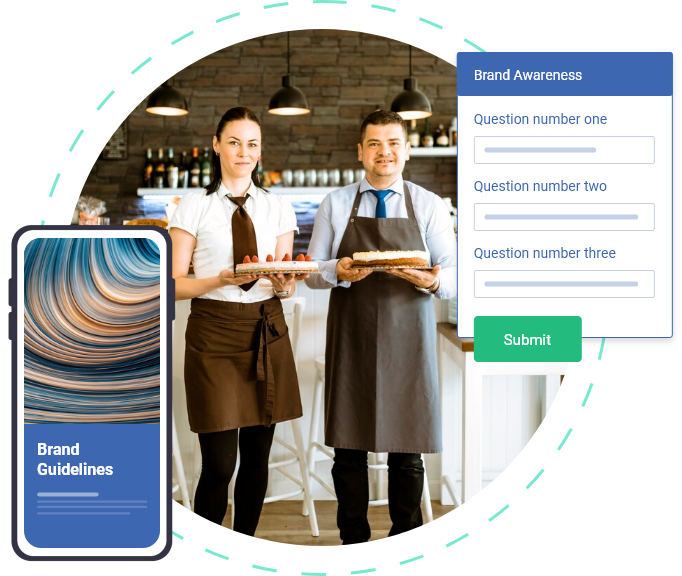
For small retail chains, franchise operations or stores with multiple branches, standardise procedures whilst allowing site-specific flexibility. Core brand standards apply everywhere whilst accommodating local market variations, different store sizes or location-specific requirements.
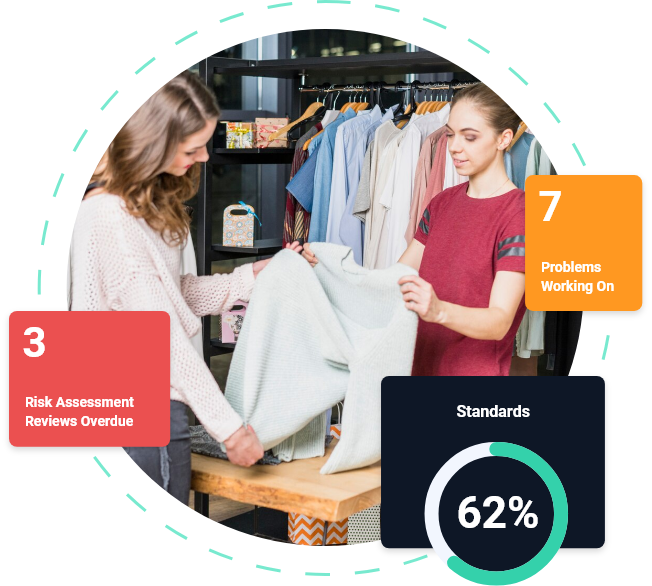
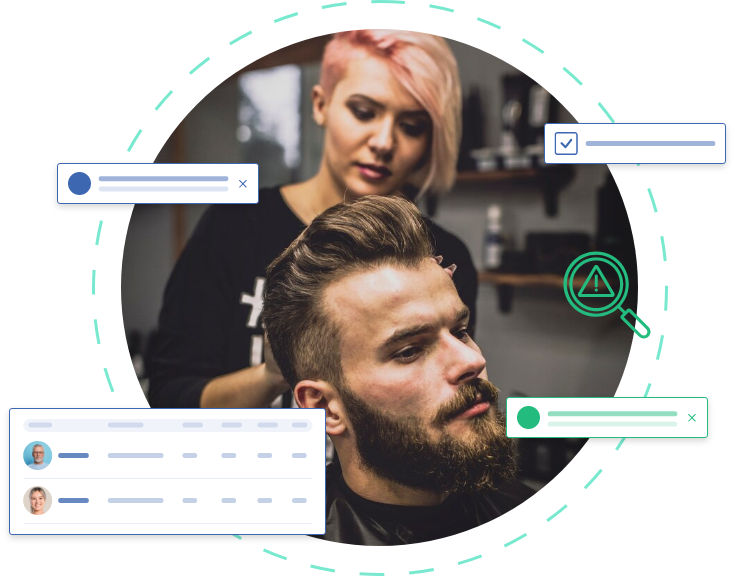
Problem reporting captures maintenance issues, stock damage, security concerns or customer complaints immediately. Staff photograph problems using their phones. Store managers see outstanding issues across their location. Area managers (if you have multiple stores) see problems across all sites, identifying recurring issues requiring strategic solutions rather than site-by-site firefighting.
Health and safety compliance made simple
Retail premises require health and safety compliance regardless of business size. Environmental Health Officers, fire safety inspectors and HSE enforcement don’t distinguish between large retailers and small businesses — the same regulations apply to everyone.
Track essential compliance obligations
Fire risk assessments, fire safety inspections, electrical testing, emergency lighting checks, portable appliance testing (PAT), manual handling assessments, accident reporting and first aid provision. Schedule inspections according to regulatory frequencies. Automated reminders ensure nothing is missed even during busy trading periods.
Risk assessments for retail operations cover customer-facing activities, stock handling, manual handling, lone working (opening/closing, late shifts), working at height (changing displays, stockroom access), cash handling security and delivery procedures. Update assessments when circumstances change and communicate revisions to relevant staff.
For retailers selling food
Farm shops, delis, bakeries, convenience stores, cafés within shops — food safety compliance is critical. Track temperature monitoring, cleaning schedules, food hygiene training, allergen management and supplier documentation. Digital food safety records provide audit trails for Environmental Health inspections supporting Food Hygiene Rating Scheme scores.
Accident and incident reporting creates records required by law. Staff report accidents, near-misses, customer incidents or security issues immediately. Investigation workflows ensure incidents are reviewed and corrective actions prevent recurrence. This systematic approach demonstrates health and safety competence to insurers and regulators.
Manage stock issues and reduce shrinkage
Stock loss, damage and security issues impact small retailers significantly. Every lost item directly affects profitability. OpsPal helps identify where stock problems occur and implement controls reducing shrinkage.
Report stock damage, customer handling damage, delivery issues or potential theft immediately. Photograph damaged goods, record location and circumstances. Track patterns showing whether problems are store-specific, product-specific or time-specific. Use this intelligence to improve stock handling, enhance security or address supplier quality issues.
For retailers with stockrooms or warehouse space
track stockroom organisation, rotation procedures, damaged stock quarantine and security controls. Ensure oldest stock sells first, damaged goods are removed from sale, and stockroom access is controlled appropriately.
Delivery and goods-in procedures ensure stock arrives undamaged, quantities match orders, and quality issues are identified before goods reach the shop floor. Digital checklists for delivery acceptance create records supporting supplier disputes or credit claims.
Compare shrinkage and damage rates across stores (if you have multiple locations). Identify whether problems are widespread (indicating systemic issues like poor supplier quality or inadequate training) or location-specific (suggesting local management, security or handling problems).
Train staff and grow your business efficiently
Retail staff turnover is high. Training new starters quickly without compromising customer service is essential.
OpsPal streamlines training whilst ensuring every team member understands their responsibilities.
Digital induction covers company policies, customer service standards, till procedures, health and safety, security protocols and emergency procedures. New starters complete induction at their own pace using tablets or smartphones. Track completion showing which elements are finished before new staff work unsupervised.
Role-specific training ensures appropriate skills for different positions. Shop floor staff learn customer service, product knowledge and merchandising. Supervisors understand cash handling, opening/closing procedures and team leadership. Stockroom staff learn manual handling, stock rotation and delivery procedures. Train once, deploy everywhere across all your stores.
For retailers selling restricted goods — knives, solvents, alcohol, tobacco, fireworks, medicines — track age verification training, refusal procedures and legal responsibilities. Prove staff are trained appropriately if challenged by trading standards or licensing authorities.
Growing without operational chaos
Small retailers expanding to multiple stores face operational challenges. How do you maintain standards when you can’t be everywhere? OpsPal provides the systems preventing quality dilution as you grow.
Standardise procedures across all stores from day one. New stores adopt proven processes from established locations. Area managers (if you expand to this level) see all stores they’re responsible for without constant travel. Compare performance across locations to identify best practice and stores needing additional support.
Franchise operations benefit particularly — franchisees receive proven operational systems whilst franchisors maintain brand standards without micromanaging individual stores. This structure supports growth whilst protecting brand consistency.

Frequently Asked Questions
What is retail operations management software?
Retail operations management software is a digital platform that helps retail stores, shopping centres and retail chains manage operations, compliance, staff training, facility maintenance and customer service standards through connected systems accessible on any device. Instead of relying on paper-based procedures stored in back offices, clipboards tracking daily checks, and spreadsheets monitoring staff qualifications, the software centralises operational documentation, task management, risk assessments, training records and incident tracking—providing real-time visibility of store performance whilst ensuring regulatory requirements like health and safety, accessibility and employment compliance are met consistently.
The platform addresses the operational challenges retail operations face. Store opening and closing procedures require security checks, cash handling protocols and facility inspections completed consistently regardless of which team members are on duty. Health and safety compliance demands risk assessments for manual handling, slip hazards, customer safety and emergency procedures. Staff training needs product knowledge, customer service standards, complaint handling protocols and till operation competency tracked systematically. Facility maintenance requires equipment checks, cleaning schedules, temperature monitoring for refrigerated areas and lighting/security system testing.
Different retail operations have different priorities. Fashion retailers focus on visual merchandising standards alongside customer service consistency. Grocery stores balance food safety compliance with stock rotation and customer flow management. Department stores coordinate multiple departments with different operational requirements and staff training needs. Shopping centres manage common areas, tenant coordination and emergency procedures across large public spaces. Electronics retailers emphasise product demonstration competency alongside security protocols. The software adapts to these different operational contexts whilst providing the systematic structure that ensures standards are maintained during busy trading periods when customer service demands compete for staff attention.
Retail operations software replaces fragmented manual systems where opening procedures exist on laminated sheets behind tills, training records live in manager diaries, and daily checks are completed on paper then forgotten. Digital systems create visibility that area managers need for multi-site oversight, provide the audit trails health and safety inspectors expect, and support operational delivery without consuming limited store manager time in administrative tracking.
How does retail software improve store operations and customer service?
Answer:
Retail software improves store operations and customer service by providing staff with immediate access to procedures, clear task assignments, and visibility of what needs completing during their shift. Opening and closing procedures, customer service protocols, complaint handling guidance and product information are accessible on any device, eliminating the need for staff to return to back offices or search through folders for operational information. When procedures are updated—new product launches, revised return policies, changed security protocols—staff receive in-app bell notifications and must acknowledge changes, ensuring everyone works to current standards rather than outdated versions remembered from initial training.
Task management with dashboard visibility shows exactly what needs completing—store opening checks, replenishment priorities, cleaning schedules, equipment inspections, security procedures. Colour-coded status indicators show which tasks are available (green), started (amber), overdue (red) or completed (grey). Store managers see operational performance across all departments without walking the store floor or requesting updates from busy team members. When staff finish shifts or leave employment, the system automatically transfers their tasks to replacements, ensuring operational continuity regardless of rota changes or staff turnover. This automatic handover means critical activities like cashing up, security checks or refrigeration monitoring continue seamlessly.
Cross-department visibility breaks down operational silos that paper systems create. Till staff can see that replenishment tasks are outstanding. Department supervisors can see which customer service training colleagues need. Store managers can see which cleaning schedules are overdue or which equipment checks weren’t completed. This transparency helps teams coordinate effectively during busy periods, ensuring nothing gets forgotten when customer demands create operational pressure. Staff covering absent colleagues see exactly what responsibilities need attention rather than guessing what the absent person usually does.
Training matrices track staff competencies at three levels—individual records showing product knowledge, customer service training and operational qualifications, team reports displaying skills across departments, and organisation-wide dashboards showing training compliance across all stores. Managers see which staff need customer service refreshers, product training for new ranges or health and safety updates. When customers ask product questions or require assistance, staff have the competency to help effectively rather than directing customers elsewhere repeatedly, improving customer experience whilst building staff confidence.
What are the biggest operational challenges in retail management?
Retail Operations – FAQ 3
Question: What are the biggest operational challenges in retail management?
Answer:
Retail management creates persistent challenges because operational standards must be maintained consistently during busy trading periods, seasonal peaks and staff absences when customer service demands create constant pressure. Ensuring opening procedures, security checks and facility inspections happen every shift regardless of which team members are on duty. Maintaining customer service standards when staff turnover means continuous training and onboarding cycles. Tracking which staff hold required competencies—customer service training, product knowledge, health and safety awareness, till operation skills—when rotas change weekly and zero-hours contracts create fluctuating availability.
Paper-based systems make these challenges exponentially harder. Procedures stored in back offices mean staff can’t reference customer service protocols or product information whilst serving customers on the shop floor. Clipboards tracking daily checks get forgotten when unexpected customer rushes or delivery arrivals create operational disruption. Training records in manager diaries mean supervisors don’t know which staff are competent for which responsibilities until they’re creating shift rotas. When problems occur—equipment failures, customer complaints, facility issues—paper logbooks provide no systematic tracking of who’s responsible for resolution or whether corrective actions are completed before problems recur.
Multi-site retail operators face additional complexity. Ensuring consistent brand standards across franchise locations or company-owned stores when each site develops its own interpretation of procedures and service expectations. Maintaining visibility of compliance status when area managers can’t physically visit every store daily. Coordinating training so all locations maintain required customer service standards and operational competencies. Demonstrating health and safety readiness across the estate when inspectors visit any store. Head office needs organisation-wide patterns for brand protection and compliance oversight whilst store managers need operational detail for shift-by-shift coordination and customer service delivery.
Staff turnover compounds every challenge. When experienced supervisors leave, operational knowledge walks out with them—store-specific procedures, equipment quirks, supplier relationships, customer service approaches all vanish. New team members need induction into company standards, product ranges and operational systems before working independently. Seasonal recruitment creates training surges during periods when experienced staff are busiest. Zero-hours contracts mean staff availability fluctuates unpredictably. Paper handovers during staff changes mean critical information gets lost—customer complaints aren’t followed up, equipment faults aren’t tracked, security concerns aren’t communicated between shifts. These gaps are where customer complaints, operational failures and compliance issues emerge.
How do retail chains maintain consistency across multiple store locations?
Retail chains maintain consistency across multiple store locations by providing all stores with the same digital procedures, task templates and operational frameworks defined by head office. When procedures are stored in store back offices or interpreted locally, each location develops variations in customer service approaches, visual merchandising standards and operational practices. When brand requirements rely on store manager memory or training from months ago, consistency gradually erodes across the estate. Digital systems centralise brand standards so every store accesses the current version of procedures, follows the same task schedules, and works within consistent operational frameworks.
Head office maintains a corporate site where brand standards, procedures and operational requirements are defined. When updates are made—new product launches, revised return policies, updated visual merchandising guidelines, changed security protocols—all store locations receive the new version within seconds. Staff acknowledgement tracking shows exactly which stores have read updated procedures and which haven’t, creating audit trails that prove communication reached store teams rather than assuming it occurred. The ability to copy documents and maintain store-specific sections means new franchise locations or company-owned stores inherit proven operational templates immediately. Instead of each store creating their own systems, they receive pre-built procedures, risk assessments and task schedules that can be adapted for their specific location whilst maintaining core brand requirements.
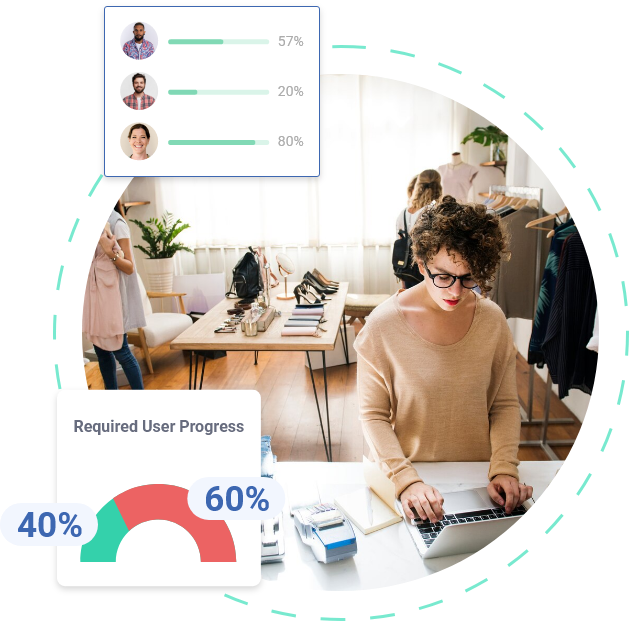
Organisation-level dashboards show brand standard compliance across the entire estate—task completion rates for opening procedures and daily checks, percentage of staff who’ve read current customer service protocols, training matrix compliance showing required competencies, outstanding problems logged at stores. This visibility identifies which locations maintain standards and which need area manager support before customer complaints or audit findings expose issues. Drill-down to store level takes seconds, showing specific detail about operational performance at individual sites. Area managers can compare performance across their territory, identify best practices from high-performing stores, and provide targeted support to struggling locations.
When store staff leave, the system automatically transfers their tasks and outstanding problems to replacements, ensuring operational continuity regardless of staff changes. Training matrices show which new staff members need customer service training, product knowledge or operational induction before working shifts independently. Problem management with photo evidence shows how stores identify and resolve operational issues—equipment failures, facility concerns, customer complaints—tracking everything through to resolution with dashboard visibility. This systematic approach means brand consistency becomes measurable and manageable rather than aspirational and assumed, ensuring customers receive the same experience regardless of which store location they visit.
Why do retail businesses need digital operations management software?
Retail businesses need digital operations management software because paper-based systems—clipboards tracking daily checks, procedures stored in back offices, training records in manager diaries—don’t provide the visibility required to maintain consistent operations during busy trading periods when customer service demands compete for operational attention. When opening procedures rely on staff remembering steps from laminated sheets, security checks get missed during rush preparations. When customer service protocols live in folders behind tills, staff can’t reference complaint handling procedures whilst dealing with frustrated customers. When training records exist in separate diaries, supervisors roster staff without required competencies until customer complaints or operational failures expose gaps. These disconnects between intended standards and actual practice are where brand damage, customer complaints and compliance failures occur.
The software creates systematic accountability through visibility. Staff see their assigned tasks with colour-coded status showing what’s overdue—opening checks, replenishment priorities, cleaning schedules, equipment inspections. Store managers see operational performance across all departments without walking the floor or requesting updates from busy team members. Area managers see organisation-wide patterns across multiple stores within seconds, identifying which locations maintain standards and which need support before customer complaints or health and safety issues expose problems. This transparency means operational activities become visible before gaps create incidents rather than being discovered retrospectively through complaint investigations or audit findings.
Multi-site retail operators face exponentially greater complexity than single stores. Ensuring consistent brand standards across franchise locations or company-owned stores. Maintaining customer service consistency when each location interprets service expectations differently. Coordinating training so all stores maintain required competencies and product knowledge. Demonstrating health and safety compliance readiness when inspectors visit any store. Digital platforms provide organisation-level dashboards showing compliance patterns across all sites, with drill-down to store level providing specific operational detail. When new stores open or franchises join the network, they simply log on and everything they need is available—procedures, task templates, risk assessments all inherited from proven operational frameworks.
The fundamental business value is protecting both brand reputation and customer experience whilst respecting limited store manager capacity. When operational standards are visible continuously, managers maintain consistency rather than discovering problems through complaints. When training matrices show staff competencies, supervisors ensure appropriately trained team members handle customer interactions. When tasks are tracked digitally with automatic handover during staff changes, nothing gets forgotten between shifts or when rotas change. When area managers visit or auditors inspect, log reports generate evidence instantly demonstrating systematic operational management. This approach eliminates the operational chaos paper systems create whilst ensuring customers receive consistent brand experiences across all store locations regardless of which team members are working.
Book a Call With Our Team
We’re on hand for any questions you may have. Simply book a meeting using our booking system and we will talk you through any questions.