The Number Isn’t the Problem. Not Knowing It Is.
I’ve sat in a lot of boardrooms over the last 30 years. And one of the things I hear most often — from CEOs, from senior leaders, from people who genuinely care about their teams — is this: “We don’t want to scare people with the amount of information needed to run a leisure centre.” I understand the instinct. I really do. But here’s what I tell them every time. What would scare me isn’t the number. What would scare me is not knowing it — and trying to manage it anyway.
So let’s look at the number.
1,257 Tasks. Every Week. One Site.
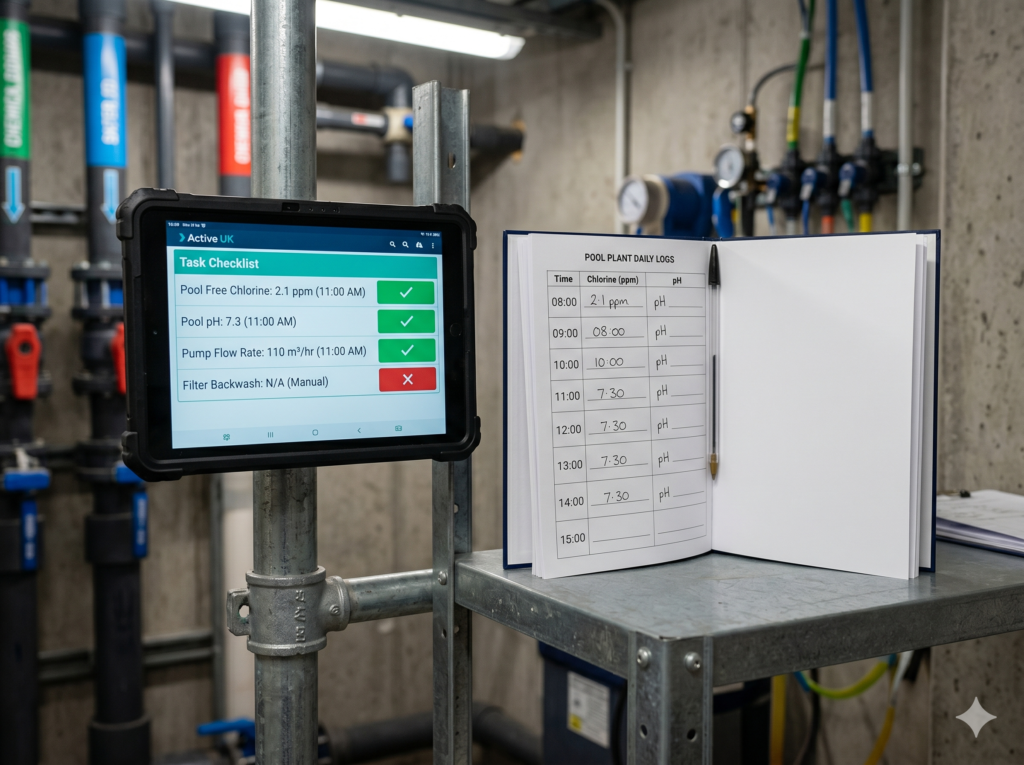
That’s what it takes to run a single leisure facility safely and compliantly — 6am to 10pm, seven days a week. Toilets checked every two hours across six areas. Pool tests, plant room logs, rotations. Changing rooms covered before every peak. Gym equipment inspections, class handovers, shift sign-offs. It adds up faster than most people expect.
Turn it annual: 65,364 tasks per year, minimum, on a single site. If you manage two sites, that’s 130,728. Three sites, nearly 200,000.
I ask this question in rooms full of experienced leisure professionals. Most people guess somewhere between 50 and 200 tasks a week. Almost nobody gets close to the real figure. And that gap — between what people think they’re managing and what they’re actually managing — isn’t a staffing problem or a budget problem. It’s a visibility problem.
And That’s Before We Get to the Documents.
Just the pool area requires 29 risk assessments, 61 procedures, 27 corporate policies, and 92 operational tasks to operate safely and compliantly. That’s one area of one site. A university sport facility — single building, gym, studios, sports hall, no pool — still requires 10 framework areas, 4 operational modes, a 16-week structured rollout, and 9 configured teams.
No pool. One building. Still this.
“We Don’t Want to Scare People.”
I hear this from good leaders. People who care about their teams, who know their staff are already stretched, who don’t want to add to the pile. It comes from the right place. But when I push on it, what I usually find is that the worry isn’t really about scaring the team. It’s about confronting the gap between where the organisation thinks it is and where it actually is.
And that gap is the real risk.
Because here’s the thing about operating without full visibility of your task load: the tasks don’t disappear. The pool chemical check still needs doing. The fire exit still needs inspecting. The staff member still needs to have read the NOP before they go poolside. Whether or not you’re tracking it, the work exists. The question is whether you know if it’s getting done.
The Plan Is What Removes the Fear. Not the Ignorance.
This is where I push back on the “don’t scare people” position every time. The number is big. It’s supposed to be big — running a leisure facility safely is a serious undertaking. But a big number with a plan is manageable. A big number without one is a liability.
OpsPal’s task management dashboard is built around exactly this. It doesn’t create new work. It makes existing work visible — to the staff member who needs to know what’s due, to the duty manager who needs to know where things stand at shift handover, and to the senior leader who needs confidence across the whole operation without chasing anyone for a report.
When tasks are set up properly — realistic frequencies, right teams, achievable timings — completion rates follow. One facility moved their changing room checks from hourly to pre-peak, four times a day. Completion went from 40% to 94% in two weeks. The rooms were actually cleaner. The team stopped feeling like they were failing. That’s what a plan does.
Visibility Isn’t a Threat. It’s the Standard.
DLR Leisure in Ireland came to OpsPal with exactly the challenge most UK operators recognise: paper-based systems, fragmented records, audit prep that ate weeks of management time. After implementing OpsPal, they saved 180 hours of accreditation preparation time and went on to achieve Ireland’s Active Gold Standard across all three facilities. The 180 hours wasn’t saved by doing less. It was saved by having everything in one place, evidenced and accessible, instead of scattered across filing cabinets and people’s heads.
That’s what knowing your number gets you.
The operations dashboard gives senior managers a live picture across all sites — not a monthly report that’s already out of date, but a real-time view of what’s done, what’s overdue, and where support is needed. Patterns that would take weeks to spot on paper surface in minutes. And when something’s missed, it’s missed on record — which means you can investigate the reason, adjust the schedule if needed, and improve.
Missed tasks are information. The question is what you do with them.
Monday Morning. Two Questions.
Walk into your building tomorrow. Find your duty manager. Ask them two things.
First: how many tasks need to be managed on their shift for it to be successful?
Second: can they prove yesterday was?
If they can answer both confidently — you’re in good shape. If they can’t, you don’t have a people problem. You have a visibility problem. And visibility is exactly what OpsPal is built to give you.
The number isn’t scary. Managing blind is.
Trusted by 50+ UK leisure operators. See how OpsPal works or explore the features.