
Hospitality and Retail Operations Software | Multi-Site Management
Deliver consistent customer experiences across all your hospitality and retail locations with operations software that manages food safety, brand standards, premises compliance and staff accountability. OpsPal helps hotels, restaurants, pubs, cafés, retail chains and visitor attractions maintain quality, ensure regulatory compliance and demonstrate governance across single sites or multi-location operations. See how Hurleston Hall Hotel benefits from OpsPal







































Maintain brand standards and customer experience
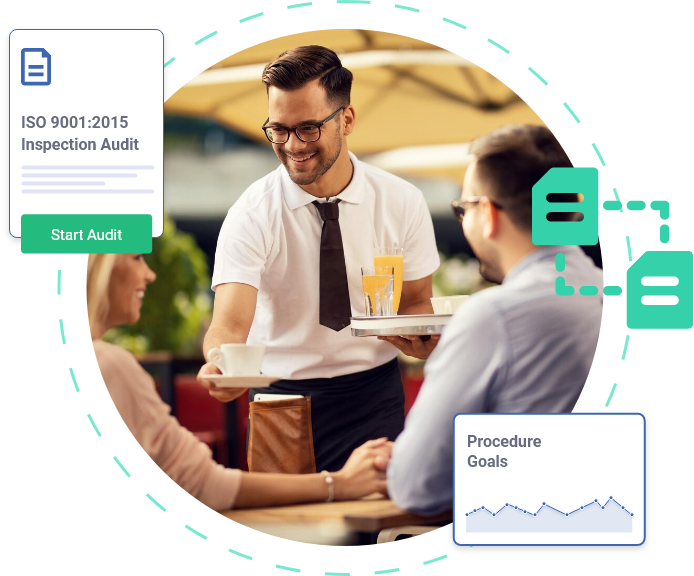
Customer expectations for hospitality and retail brands are high. Whether you operate one location or hundreds, maintaining consistent quality, cleanliness, service standards and brand presentation is essential for customer satisfaction, reputation and repeat business.
Hospitality operations
Digital checklists for opening and closing procedures ensure consistent standards regardless of which team member is on duty. Bar setup, kitchen prep, dining area checks, toilets and washroom cleanliness, and front-of-house presentation follow the same procedures every shift. Mobile access means staff complete checks in real-time without paperwork delays.
Track housekeeping standards in hotels and accommodation. Room cleaning checklists, linen management, maintenance reporting and quality inspections ensure every guest experiences the same high standards. Managers see completion rates and quality scores across all rooms and shifts.
Retail operations
Maintain visual merchandising standards, stockroom organisation, shop floor presentation and customer service consistency. Opening and closing procedures cover till setup, stock checks, display standards, security protocols and premises inspection. Ensure brand presentation is identical whether customers visit your flagship store or smallest location.
Mystery shopper findings, customer complaints and quality issues are logged immediately with photographic evidence. Problem tracking ensures issues are resolved promptly and patterns are identified. When the same display problems or service gaps appear across multiple locations, you’ve identified training needs or procedural improvements required chain-wide.
Multi-site brand consistency
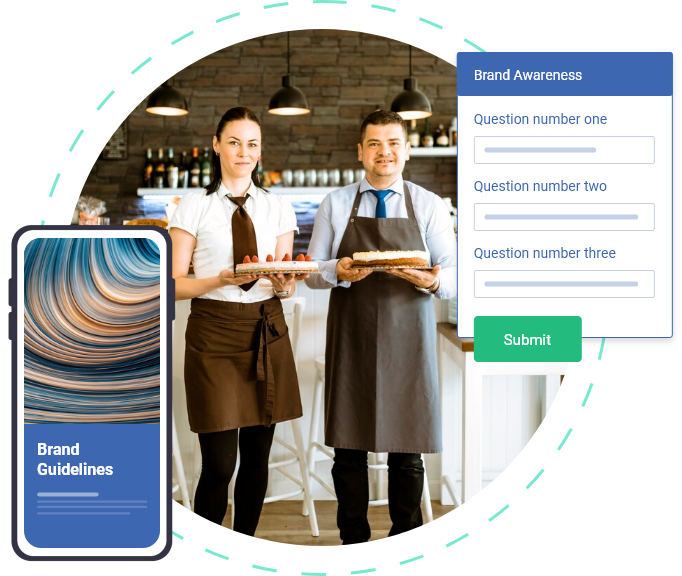
For hospitality groups and retail chains, OpsPal ensures brand standards apply across all locations. Deploy standard procedures, quality checklists and training across your entire estate. When one location develops excellent practice, roll improvements across all sites instantly. Compare quality metrics across locations to identify top performers and sites needing support.
Ensure food safety and regulatory compliance
Food safety is critical for hospitality operations and retail food businesses. Environmental Health Officers (EHOs) expect systematic food safety management, HACCP compliance and audit trails demonstrating your proactive approach to food hygiene.
HACCP and food safety management
Digital food safety checks replace paper-based systems vulnerable to loss or retrospective completion. Temperature monitoring for fridges, freezers and hot holding; cooking temperature verification; cleaning schedules; pest control records; and supplier due diligence are captured in real-time with audit trails showing when checks were actually completed, not written up later.
Link food safety procedures to daily tasks. Staff access HACCP plans, allergen information, cleaning procedures and cooking instructions when needed. This just-in-time reference ensures consistent food handling practices and supports less experienced team members.
Allergen management
Track allergen information for every menu item. Update allergen details when recipes or suppliers change, ensuring front-of-house staff always have current information for customer enquiries. Link allergen training to staff records, proving everyone serving food understands allergen risks and communication responsibilities.
Staff training and certification
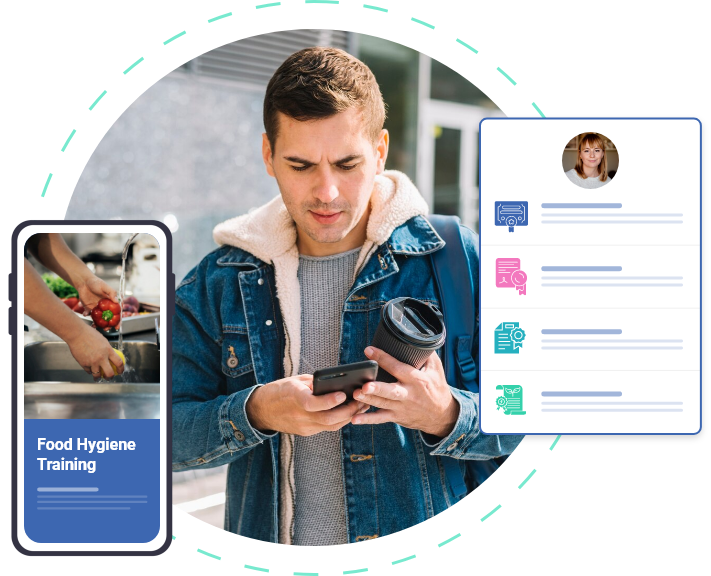
Track food hygiene qualifications, allergen training, HACCP knowledge and refresher training across all team members. Automated reminders ensure certifications don’t lapse. Link food safety competency to task completion — only trained staff complete temperature checks, food preparation tasks or allergen information updates.
Environmental Health and Food Standards Agency compliance
Generate food safety reports for Environmental Health inspections showing systematic temperature monitoring, cleaning records, staff training, HACCP implementation and corrective actions. This evidence supports Food Hygiene Rating Scheme scores and demonstrates due diligence in food safety management.
Retail food safety
For retailers selling fresh food, bakery products, hot food counters or prepared meals, the same food safety principles apply. Temperature monitoring, date code management, cleaning schedules, allergen labelling and staff training require systematic tracking and audit trails for compliance and customer safety.
Manage premises safety and facilities maintenance
Hospitality venues and retail stores require extensive premises compliance alongside customer-facing operations. Fire safety, gas safety, electrical testing, legionella control, equipment maintenance and emergency procedures demand systematic management.
Health and safety compliance
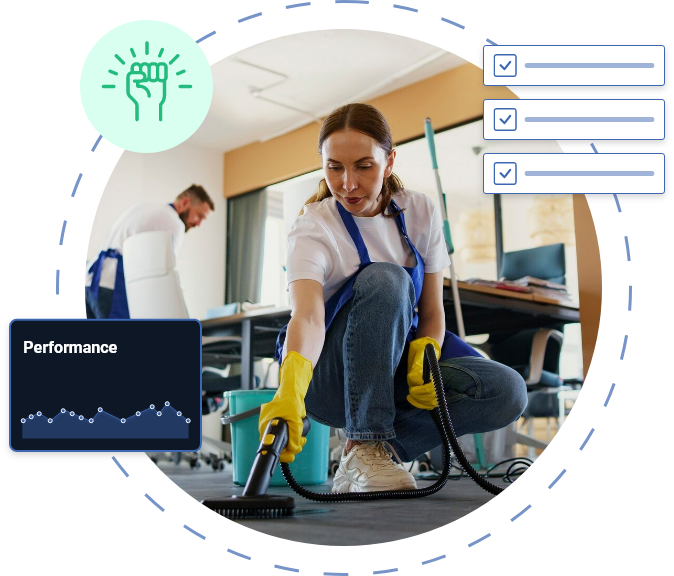
Track fire risk assessments, emergency lighting tests, fire alarm inspections, fire extinguisher servicing and evacuation procedures. Schedule gas safety annual checks, electrical testing (5-year PAT testing, fixed installation testing), legionella temperature monitoring and ventilation system maintenance according to regulatory requirements.
Digital inspection records prove systematic premises management rather than reactive responses to problems. When EHOs, fire safety officers or insurance inspectors visit, generate comprehensive evidence showing scheduled inspections, maintenance tracking and corrective action management.
Equipment maintenance and breakdown prevention
Hospitality and retail depend on operational equipment — kitchen appliances, refrigeration, air conditioning, tills, coffee machines, ice makers, ovens, dishwashers and specialist equipment. Preventative maintenance reduces breakdowns that disrupt service or close facilities.
Schedule equipment servicing based on manufacturer recommendations and usage patterns. Track maintenance history for each asset. When equipment fails repeatedly, maintenance records support warranty claims or replacement business cases. Location tracking shows which sites or equipment types generate most maintenance issues, informing strategic decisions about equipment investment.
Problem and defect reporting
Staff photograph maintenance issues, cleanliness concerns, equipment faults or safety hazards as they’re discovered. Problems route automatically to responsible people — facilities teams for building issues, equipment suppliers for appliance faults, area managers for quality standards. Complete visibility ensures problems are resolved rather than forgotten in busy operations.
Track problem resolution times across locations. Identify sites where issues linger unresolved, indicating inadequate resources or management attention. Use this data to improve operational responsiveness and customer experience.
Security and lone working
Retail and hospitality staff often work alone during opening, closing or quiet periods. Track lone working risk assessments, emergency procedures and welfare checking systems. Manage security equipment testing, alarm systems and CCTV maintenance. Ensure cash handling procedures, robbery response plans and incident reporting systems are current and accessible to all staff.
Multi-location visibility and accountability
Operating multiple hospitality venues or retail locations creates complexity. How do you ensure brand standards, compliance and operational quality are consistent across sites without constant physical presence at every location?
Real-time operational visibility
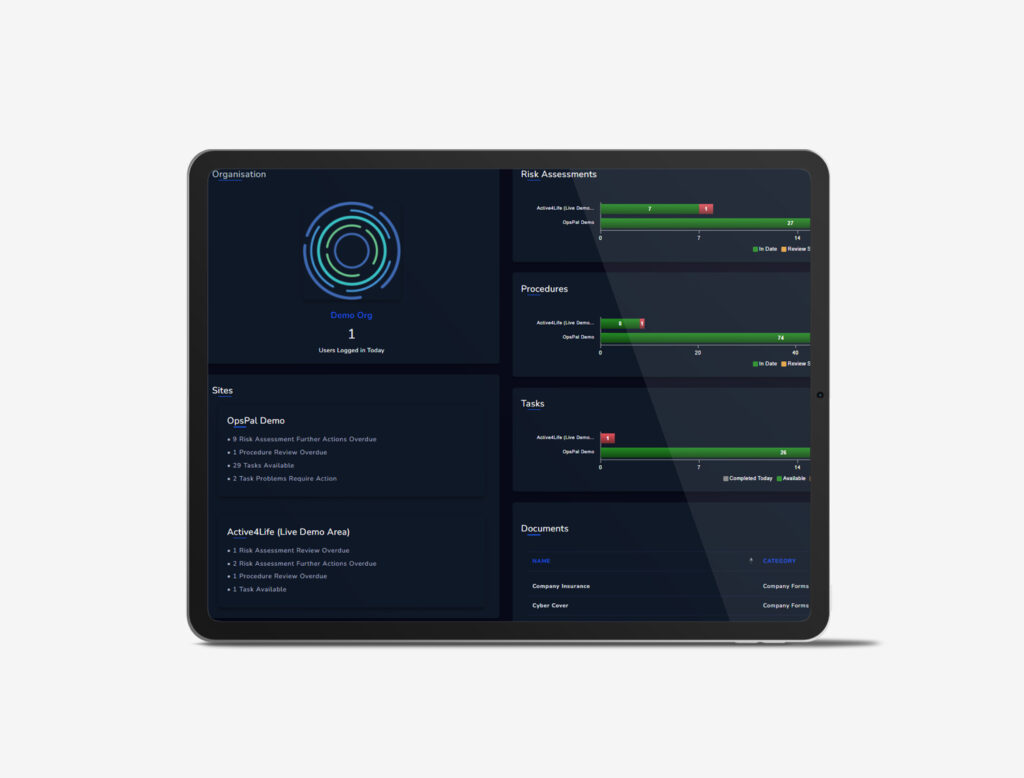
Dashboards show which locations completed opening checks, which have overdue food safety inspections, which sites have unresolved problems, and where quality standards need attention. This visibility enables strategic oversight whilst empowering site teams to manage day-to-day operations autonomously.
Area managers see all locations they’re responsible for simultaneously. Filter by site, compliance category, problem status or quality metric. Focus attention where it’s needed most rather than treating all sites equally regardless of actual performance.
Location-based performance comparison
Compare operational metrics across locations. Which sites achieve highest cleanliness scores? Where are food safety checks most consistent? Which locations resolve problems fastest? Use these comparisons to identify best practice for replication and underperforming sites requiring support.
Track whether operational challenges are site-specific (indicating local management or resource issues) or chain-wide (suggesting systemic problems needing centralised solutions). This intelligence supports strategic decisions about training investment, facilities improvements or operational procedure changes.
Standardisation with local flexibility
Deploy core brand standards, compliance requirements and quality expectations across all locations. Simultaneously accommodate site-specific requirements — different food safety risks in different menu formats, varying premises compliance based on building age, or local market adaptations to service delivery.
When you update procedures, food safety protocols or training materials, changes deploy instantly across relevant locations. Staff receive automatic notifications about updates. This eliminates the lag where some sites operate to outdated standards whilst others have implemented improvements.
Support franchisees and managed operations
For hospitality groups using franchise models or retail chains with franchise locations, OpsPal provides franchisees with operational systems whilst giving franchisor oversight. Franchisees benefit from proven procedures, training materials and compliance tracking. Franchisors verify brand standards are maintained without micromanaging day-to-day operations.
Mixed estate models (owned sites, managed operations, franchises) all operate within the same system, providing consistent brand experience regardless of ownership structure.
Frequently Asked Questions
Question: What is hospitality and retail operations management software?
Hospitality and retail operations management software is a digital platform that helps restaurants, hotels, cafes, retail stores and hospitality venues manage operations, compliance, food safety, staff training and facility maintenance through connected systems accessible on any device. Instead of relying on paper-based procedures stored in back offices, clipboards tracking daily checks, and spreadsheets monitoring staff qualifications, the software centralises operational documentation, task management, risk assessments, training records and incident tracking—providing real-time visibility of venue performance whilst ensuring regulatory requirements like food hygiene and health and safety are met consistently.
The platform addresses the operational challenges hospitality and retail venues face. Food safety requires temperature monitoring, allergen management, hygiene protocols, and equipment checks that are systematically tracked. Customer-facing operations need staff trained in service standards, complaint handling and accessibility requirements. Health and safety compliance demands risk assessments for manual handling, slip hazards and customer safety. Multi-site operators need visibility across their estate whilst empowering venue managers to handle day-to-day operations effectively. Opening and closing procedures, cash handling protocols and security checks require consistent completion regardless of which team member is on duty.
Different hospitality and retail operations have different priorities. Quick-service restaurants focus on food safety and speed alongside brand consistency. Hotels balance guest experience with housekeeping standards and facility compliance. Retail stores coordinate stock management with customer service protocols. Licensed premises manage alcohol service regulations alongside venue safety. The coffee shops maintain food hygiene while coordinating multiple service periods. The software adapts to these different operational contexts whilst providing the systematic structure that ensures standards are maintained during busy trading periods when customer demands compete for staff attention.
Hospitality and retail operations software replaces fragmented manual systems where opening procedures exist on laminated sheets behind tills, training records live in manager notebooks, and temperature logs are completed on paper then filed away. Digital systems create visibility that area managers need for multi-site oversight, provide the audit trails environmental health officers expect, and support operational delivery without consuming limited management time in administrative tracking.
How does hospitality software help with food safety compliance?
Hospitality software helps with food safety compliance by scheduling critical activities as recurring digital tasks with dashboard visibility showing completion status and tracking who completed what, when, and at which temperature. Fridge and freezer temperature monitoring, cooking temperature checks, hot holding verification, delivery inspections and allergen management appear as assigned tasks with colour-coded indicators—green for available, amber for started, red for overdue. This visual management means managers see exactly which food safety activities are current and which need immediate attention, preventing compliance gaps during busy service periods when customer orders create operational pressure.
Food safety procedures—allergen protocols, cleaning schedules, cooking instructions, delivery acceptance criteria, pest control monitoring—are stored digitally with staff acknowledgement tracking. When procedures are updated to reflect new allergen requirements or Food Standards Agency guidance, kitchen and front-of-house staff receive in-app bell notifications and must acknowledge changes before the system marks them compliant. Version control with visual comparison shows exactly what changed between revisions, ensuring staff understand updated food safety requirements rather than assuming they remember outdated versions. Tasks and problems can have locations added, verifying staff were in the kitchen or storage area when they signed off temperature checks rather than marking activities complete from the office.
Training matrices track food hygiene qualifications (Level 2 Food Safety, allergen awareness training, HACCP understanding) at three levels—individual staff records, team reports and organisation-wide dashboards. Colour coding shows which qualifications are current (green), expiring within 90 days (amber), or expired (red). This visibility ensures managers don’t roster staff with expired food hygiene certificates to food preparation duties. When staff leave, the system automatically transfers their food safety tasks to replacements, immediately highlighting any qualifications the new team member needs before handling food.
When environmental health officers visit for inspections, log reports filtered by date range generate comprehensive evidence showing temperature monitoring occurred consistently, cleaning schedules were followed, allergen controls were maintained, and staff held current food hygiene qualifications. This systematic documentation demonstrates food safety management is genuinely embedded in daily operations rather than paperwork compiled reactively when inspection notices arrive—which is exactly what environmental health officers look for when determining Food Hygiene Rating Scheme scores.
What are the biggest operational challenges in hospitality and retail?
Hospitality and retail operations face persistent challenges because standards must be maintained consistently during busy trading periods when customer service demands compete for staff attention. Ensuring opening procedures, equipment checks and food safety monitoring happen every shift regardless of which team members are on duty. Maintaining service standards when staff turnover means constant training and onboarding cycles. Tracking which staff hold current food hygiene certificates, first aid qualifications or licence holder credentials when rotas change weekly. Coordinating multiple service periods—breakfast, lunch, dinner service in restaurants; peak trading hours in retail—where operational tasks must happen at specific times without disrupting customer experience.
Paper-based systems make these challenges exponentially harder. Procedures stored in back offices mean staff can’t reference food safety protocols or service standards at the point of work. Clipboards tracking temperature monitoring get forgotten when unexpected customer rushes create operational pressure. Training records in manager notebooks mean duty managers don’t know which staff are qualified for which responsibilities until they’re creating shift rotas. When problems occur—equipment failures, customer complaints, food safety concerns—paper logbooks provide no systematic tracking of resolution or visibility of who’s responsible for corrective actions.
Multi-site operators face additional complexity. Ensuring consistent brand standards across franchise locations or company-owned venues when each site develops its own interpretation of procedures. Maintaining visibility of compliance status when area managers can’t physically visit every venue daily. Coordinating training so all locations maintain required food safety and service qualifications. Demonstrating environmental health readiness across the estate when inspectors visit any location without warning. Head office needs organisation-wide patterns for brand protection whilst venue managers need operational detail for shift-by-shift management.
Staff turnover compounds every challenge. When experienced shift supervisors leave, operational knowledge walks out with them. New team members need induction into venue-specific procedures, food safety protocols and service standards. Seasonal recruitment in hospitality means constant training cycles. Zero-hours contracts create fluctuating team availability. Paper handovers during staff changes mean critical information gets lost—allergen updates aren’t communicated, equipment faults aren’t tracked, opening procedures are forgotten. These gaps are where food safety failures, customer complaints and brand damage emerge.
How do multi-site hospitality businesses maintain brand consistency?
Multi-site hospitality businesses maintain brand consistency by providing all venue locations with the same digital procedures, task templates and operational frameworks defined by head office. When procedures are stored in venue back offices or interpreted locally, each location develops variations in food preparation methods, service standards and operational practices. When brand requirements rely on venue manager memory or training from months ago, consistency gradually erodes. Digital systems centralise brand standards so every location accesses the current version of procedures, follows the same task schedules, and works within consistent quality frameworks.
Head office maintains a corporate site where brand standards, procedures and operational frameworks are defined. When updates are made—new menu items, revised allergen protocols, updated service standards—all venue locations receive the new version within seconds. Staff acknowledgement tracking shows exactly which venues have read updated procedures and which haven’t, creating audit trails that prove communication reached venue teams rather than assuming it occurred. The ability to copy documents and maintain venue-specific sections means new franchise locations or company-owned sites inherit proven operational templates immediately. Instead of each venue creating their own systems, they receive pre-built procedures, risk assessments and task schedules that can be adapted for their specific location whilst maintaining core brand requirements.
Organisation-level dashboards show brand standard compliance across the entire estate—task completion rates for food safety monitoring, percentage of staff who’ve read current procedures, training matrix compliance showing food hygiene qualifications, and outstanding problems logged at venues. This visibility identifies which locations maintain standards and which need area manager support. Drilling down to venue level takes seconds, showing specific detail about operational performance at individual sites. Area managers can compare performance across their territory, identify best practices from high-performing venues, and provide targeted support to struggling locations before customer complaints or environmental health failures damage brand reputation.
When venue staff leave, the system automatically transfers their tasks and outstanding problems to replacements, ensuring operational continuity regardless of staff changes. Training matrices show which new staff members need food hygiene training, allergen awareness or service standard induction before working shifts. Problem management with photo evidence shows how venues identify and resolve operational issues—equipment failures, food safety concerns, customer complaints—tracking everything through to resolution with dashboard visibility. This systematic approach means brand consistency becomes measurable and manageable rather than aspirational and assumed.
Why do hospitality and retail businesses need digital operations software?
Hospitality and retail businesses need digital operations software because paper-based systems—clipboards tracking temperature checks, procedures stored in back offices, training records in manager notebooks—don’t provide the visibility required to maintain consistent operations during busy trading periods when customer service demands compete for staff attention. When food safety monitoring relies on someone remembering to check the clipboard between serving customers, temperature checks get missed. When opening procedures exist on laminated sheets behind tills, new staff follow incomplete versions when experienced team members aren’t on duty. When training records live in separate notebooks, duty managers roster staff with expired food hygiene certificates until environmental health inspections expose gaps. These disconnects between intended standards and actual practice are where food safety failures, customer complaints and brand damage occur.
The software creates systematic accountability through visibility. Staff see their assigned tasks with colour-coded status showing what’s overdue—temperature monitoring, equipment checks, cleaning schedules, opening procedures. Venue managers see operational performance across all service areas without walking the venue or requesting updates from busy team members. Area managers see organisation-wide patterns across multiple sites within seconds, identifying which venues maintain standards and which need support before environmental health visits or customer complaints expose problems. This transparency means critical activities become visible before gaps create incidents rather than being discovered retrospectively through inspection failures or complaint investigations.
Multi-site operators face exponentially greater complexity than single venues. Ensuring consistent food safety standards across franchise locations or company-owned sites. Maintaining brand consistency when each venue interprets service standards differently. Coordinating training so all locations maintain required food hygiene and allergen awareness qualifications. Demonstrating environmental health readiness when inspectors visit any venue without warning. Digital platforms provide organisation-level dashboards showing compliance patterns across all sites, with drill-down to venue level providing specific operational detail. When new venues open or franchises join the network, they simply log on and everything they need is available—procedures, task templates, risk assessments all inherited from proven operational frameworks.
The fundamental business value is protecting both customer safety and brand reputation whilst respecting limited management capacity. When food safety compliance is visible continuously, managers prevent incidents rather than reacting to them. When training matrices show qualification status, rotas maintain appropriately qualified staff coverage. When operational tasks are tracked digitally with automatic handover during staff changes, nothing gets forgotten between shifts. When environmental health officers visit, log reports generate evidence instantly demonstrating systematic food safety management. This approach eliminates operational chaos paper systems create whilst providing the audit trails regulators expect and the brand consistency customers experience across all locations.
Book a Call With Our Team
We’re on hand for any questions you may have. Simply book a meeting using our booking system and we will talk you through any questions.