There are two types of leisure manager. The first is scared of knowing — because if you never look, you never have to act. You can walk the facility, greet the members, tell yourself things are running well, and genuinely believe it. No dashboards. No data. No difficult conversations. Bliss, almost. The second type is scared of not knowing. They’re the ones who lie awake wondering whether the pool plant checks were done, whether the new lifeguard has read the NOP, whether there’s a risk assessment sitting overdue that nobody’s flagged. That worry isn’t weakness. That’s what good leadership feels like. And here’s the thing — the managers who are scared of not knowing are the ones who actually sleep at night. Because they do something about it. It’s a good job Quest give you a ‘notice of an assessment’, isn’t it. Which does make you wonder — why do they need to?
The Questions You Should Be Able to Answer Right Now
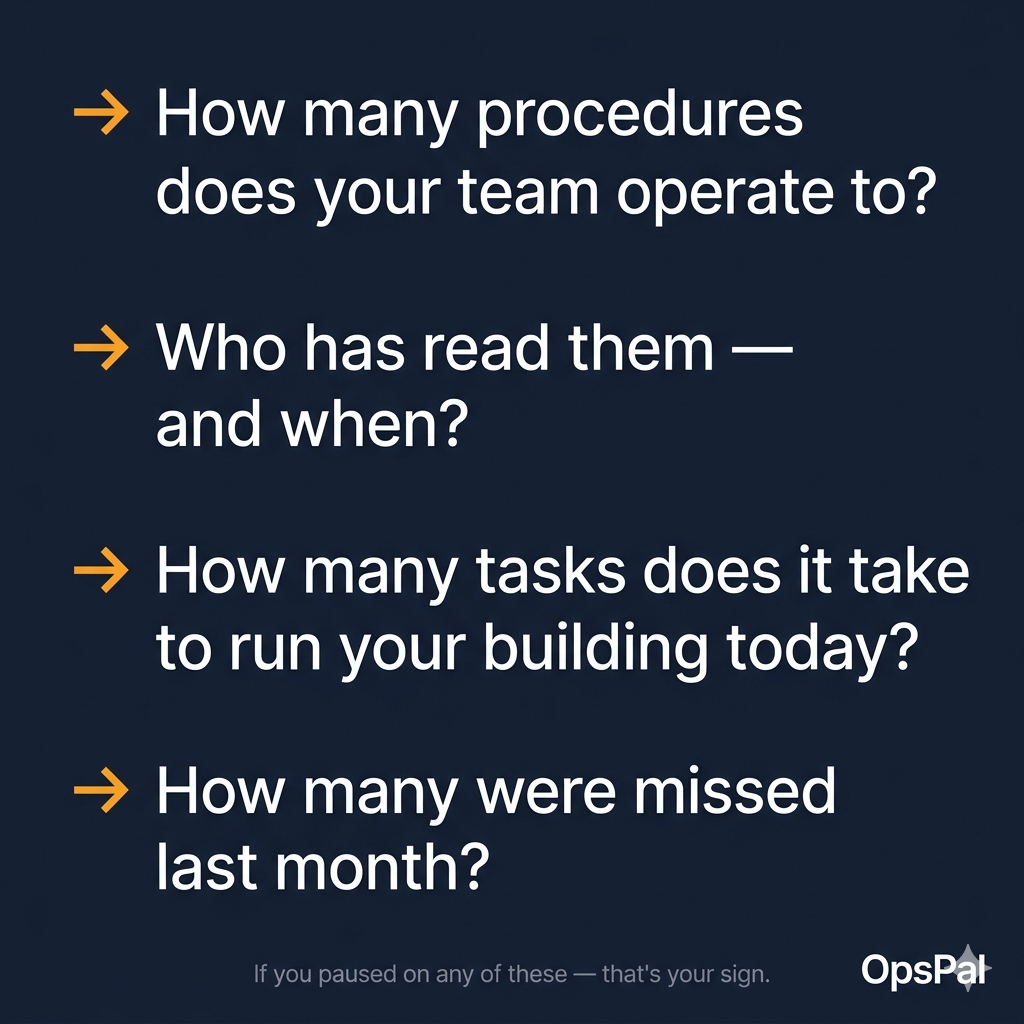
No preparation. No asking your deputy. No digging through folders. Just answer these from the top of your head:
How many procedures does your team operate to?
Who has read them — and when?
How many tasks does it take to run your building on a typical day?
How many of those tasks were missed last month?
If you paused on any of those — even for a second — that’s your answer. Not a trick question. Not an unfair one. These are the basics of knowing what’s going on in your own operation. And if you can’t answer them, you’re not in the first group or the second. You’re in a third group nobody talks about: the ones who don’t know they should be worried.
Scared of Knowing — Let’s Call It What It Is
The managers who avoid looking at their operation aren’t all bad managers. Some of them care deeply. But there’s a pattern worth naming — because it shows up more than it should at senior level in this industry.
If you don’t measure missed tasks, you can tell yourself the team is on top of it. If there’s no record of who’s read which procedure, you can assume everyone has. If the training matrix doesn’t exist, you can believe the qualifications are all current. This isn’t ignorance. It’s a choice. And the choice is this: if I don’t look, I can’t be accountable for what I find.
That works. Right up until a RIDDOR report. A safeguarding concern. A Quest assessor asking for six months of compliance evidence you haven’t got. A trustee asking why three risk assessments haven’t been reviewed since before the last management restructure. These moments don’t send a calendar invite. They arrive when the gap between what you think is happening and what’s actually happening becomes impossible to paper over.
Being scared of knowing isn’t a management style. It’s a liability dressed up as confidence.
Scared of Not Knowing — This Is the One Worth Being
The managers who worry about their operation are the ones paying attention. They’re the ones who notice when something feels off. They’re the ones asking whether the Saturday team actually completed the pre-opening checks, or whether the duty manager signed them off from the car park. They’re the ones who want to know — really know — what’s going on.
That kind of worry used to mean chasing paperwork, making calls, and hoping the picture you got back was accurate. It meant relying on people telling you what you wanted to hear rather than what was actually happening. That’s an exhausting way to run a facility.
The managers scared of not knowing don’t need six weeks’ notice from Quest. They already know what the assessor is going to find — because they’ve been looking at it all year. The audit trail exists. The evidence is there. The gaps were spotted and fixed before they became a problem.
That’s not luck. That’s what visibility looks like when it’s working.
What You Should Actually Be Able to See
Here’s what knowing your operation looks like in practice. Not theory — actual visibility.
You should be able to see how many tasks it takes to run your building on any given day, which ones were completed, which ones were missed, and who was responsible. You should be able to pull up your training matrix and know — right now — whether every lifeguard on shift today holds a current NPLQ. You should be able to see which procedures have been updated, and whether your team has acknowledged the changes or whether the new version is sitting there unread.
This isn’t a wish list. This is what OpsPal gives you — live, from any device, across every site you manage. Trusted by 50+ UK leisure operators, it was built by operators who understood exactly what it felt like to not know — and decided that wasn’t good enough.
The four questions from earlier in this blog? OpsPal answers all of them. Not at the end of the month in a report you have to interpret. Right now, on a dashboard that tells you the truth whether you’re ready for it or not.
So Which Type Are You?
Scared of knowing — comfortable in the dark, hoping nothing surfaces?
Or scared of not knowing — awake to the responsibility, and ready to do something about it?
The managers in the second group are the ones sleeping at night. Not because everything is perfect. Because they know what’s going on, they know what needs fixing, and they’re fixing it. There’s no gap between the operation they think they’re running and the one that actually exists.
The ones in the first group are sleeping too. The difference is they don’t know yet that they shouldn’t be.
Monday Morning Action: Ask your team the four questions from this blog. Write the answers down honestly. If any of them are “I’m not sure” — that’s not a small thing. That’s where you start.